
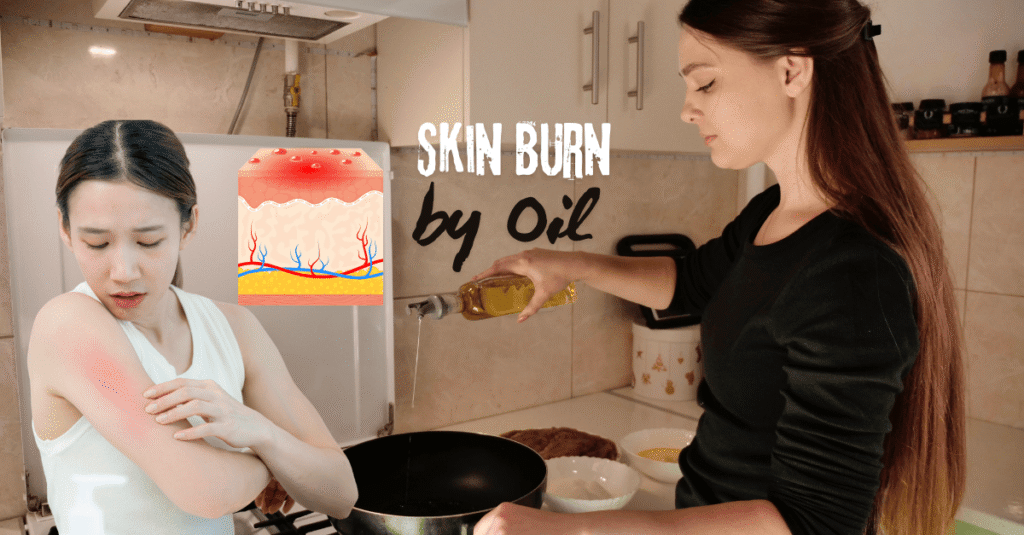
How Hot Oil Damages the Skin
Skin burn by oil can cause serious skin damage within seconds of contact. Unlike hot water, oil retains heat for a longer time and sticks to the skin, which increases the severity of burns. Here’s how hot oil affects your skin:
Causes Immediate Thermal Burns
When the skin is exposed to very high heat (like fire, hot water, steam, or hot oil), the energy from heat rapidly transfers to skin proteins and fats. This causes a chemical change called protein denaturation, where proteins like collagen lose their natural shape and stop working properly. The cell membranes also get damaged because heat breaks the lipid structure that keeps cells stable. In simple terms, the reaction is like:
Heat energy + skin proteins → denatured proteins + cell damage
Because of this fast breakdown, the skin cells get destroyed instantly, leading to redness, pain, blisters, and in severe cases, deep tissue injury.
Damages the Skin Barrier
When hot oil touches the skin, it doesn’t just burn the surface—it also breaks the skin barrier, which is the protective layer made of lipids (fats) and proteins. Because oil is also fat-based, it spreads easily and penetrates deeper into this layer.
Chemically, the heat from oil causes lipid oxidation and protein denaturation– Hot oil (thermal energy + lipid contact) → skin barrier lipids + proteins → oxidized lipids + denatured proteins
This means the “cement” (lipids) between skin cells gets destroyed, and the “brick structure” (cells) becomes weak. As a result, the barrier cannot hold moisture or block irritants anymore.So after an oil burn, the skin becomes dry, inflamed, sensitive, and prone to infection, because its natural protective shield is chemically and physically damaged.
Leads to Blister Formation
When hot oil damages the skin, the heat goes deep enough to injure the epidermis (top layer) and sometimes the upper dermis. This injury triggers the body’s protective response: it sends fluid (plasma) from nearby blood vessels into the damaged area to protect and heal it.
Chemically and biologically, this happens due to cell membrane damage + inflammation response– Heat from oil → cell membrane rupture + protein denaturation → inflammation → fluid leakage (plasma) → blister formation
The fluid collects between skin layers, creating a blister (fluid-filled sac). This acts like a natural cushion to protect the deeper tissues from further damage while the skin repairs itself underneath.
Causes Deep Tissue Injury
Hot oil burns can cause deep tissue injury because oil holds heat longer than water and spreads easily on the skin, allowing heat to penetrate deeper layers.
At the chemical level, the heat energy causes severe protein denaturation and lipid membrane destruction in skin cells – Hot oil (sustained heat energy) → epidermis + dermis proteins/lipids → irreversible cell damage + tissue necrosis
As the temperature damages more cells, it disrupts cell membranes, blood vessels, and connective tissue (collagen and elastin). This leads to loss of oxygen supply and cell death in deeper layers of skin.So instead of just a surface burn, the injury can extend into deeper tissue, causing tissue necrosis, delayed healing, and possible scarring.
Immediate First Aid for Skin Burn by Oil
Hot oil burns can happen quickly while cooking, especially in the kitchen. Taking immediate action can reduce pain, prevent infection, and minimize scarring. Here’s what you should do right away:
| Step | What To Do | Important Notes |
|---|---|---|
| 1. Move Away from Heat | Move away from stove or hot oil. Turn off gas if safe. | Prevents further injury. |
| 2. Cool the Burn | Hold under cool running water for 15–20 minutes. | ✔ Use cool water (not ice-cold) ❌ Do not apply ice ✔ Use clean wet cloth if no running water |
| 3. Remove Tight Items | Remove rings, bracelets, tight clothing. | Do this before swelling starts. ⚠️ If clothing sticks, cut around it — don’t pull. |
| 4. Cover the Burn | Pat dry and cover with sterile non-stick bandage or clean cloth. | Keep dressing loose to avoid pressure and infection. |
| 5. Manage Pain | Take Paracetamol or Ibuprofen (if suitable). | Follow proper dosage instructions. |
| 6. Avoid These | Do NOT apply toothpaste, butter, oil, ice, or powder. | These trap heat and increase infection risk. |
| 7. Blister Care | Do not pop blisters. | If blister breaks, clean gently and cover with sterile dressing. |
Best Home Remedies for Minor Oil Burns
⚠️ Use these remedies only for minor (first-degree) burns after cooling the skin under running water for 15–20 minutes.
| Remedy | Details |
|---|---|
| Aloe Vera for Burn Relief | Why it works: Natural soothing, anti-inflammatory & healing properties. How to use: Apply fresh aloe vera gel directly from the leaf. Use 2–3 times daily. Let it absorb naturally (no tight covering). Best for: Redness, mild pain & small surface burns. |
| Honey for Healing | Why it works: Antibacterial & wound-healing properties help prevent infection. How to use: Apply a thin layer of pure raw honey. Cover with sterile gauze. Change dressing daily. Best for: Small burns with slight skin damage. |
| Cold Milk Compress | Why it works: Milk proteins & fats may temporarily soothe irritated skin. How to use: Soak clean cloth in cold milk. Apply for 5–10 minutes. Rinse gently with cool water afterward. Best for: Mild burning sensation after initial cooling. |
| Coconut Oil (Use Carefully) | Important: Do NOT apply immediately after burn (can trap heat). When to use: After burn cools completely & skin starts healing (no open wound). How it helps: Moisturizes skin & reduces dryness/peeling during healing. |
Medical Treatment for Severe Oil Burns
Severe oil burns need immediate medical care because hot oil can damage deeper layers of the skin. Doctors first examine the burn to determine its depth and severity before starting treatment.
The burned area is carefully cleaned and dressed to remove bacteria and dead tissue. Sterile bandages are applied to protect the wound and support healing. Doctors may also prescribe antibiotic creams or ointments to prevent infection.
To reduce discomfort, pain relief medications may be given. In more serious cases, patients may receive intravenous (IV) fluids to prevent dehydration and maintain fluid balance.
If the burn is deep or covers a large area, doctors may recommend skin grafting, where healthy skin from another part of the body is used to cover the damaged area and help it heal properly.
Early medical treatment is important to prevent complications, reduce scarring, and promote faster healing. If a burn is large, very painful, or shows signs of infection, medical help should be sought immediately.
How to Prevent Scars After Skin Burn by Oil
Preventing scars after an oil burn depends on proper wound care and early treatment. The first step is to keep the burn clean and protected to avoid infection, as infections can increase the chances of scarring.
After the burn starts healing, moisturizing the skin regularly is important. Using soothing ingredients like aloe vera gel or a gentle moisturizer helps keep the skin hydrated and supports the natural healing process.
It is also important to avoid picking or scratching the healing skin. Removing scabs or touching the burn repeatedly can damage new skin tissue and lead to permanent scars.
Protecting the burned area from sunlight is another key step. Sun exposure can darken the healing skin and make scars more visible, so covering the area or applying sunscreen can help prevent pigmentation.
In some cases, doctors may recommend scar-reducing treatments such as silicone gel sheets, medicated creams, or dermatological procedures to improve the appearance of the skin.
How Long Does an Oil Burn Take to Heal?
The healing time for an oil burn depends on the severity and depth of the burn. Mild burns usually heal faster, while deeper burns may take longer and sometimes require medical treatment.
First-degree burns, which affect only the outer layer of the skin, usually heal within 3 to 7 days. The skin may appear red and slightly painful but typically heals without leaving a scar.
Second-degree burns damage deeper layers of the skin and may cause blisters, swelling, and more pain. These burns usually take 2 to 3 weeks to heal, depending on proper care and treatment.
Severe or third-degree burns can damage deeper tissues and may take several weeks to months to heal. In some cases, medical treatments such as special dressings or skin grafting may be required.
Proper wound care, keeping the burn clean, and avoiding infection can help the skin heal faster. If the burn is very painful, large, or shows signs of infection, it is important to seek medical attention.
FAQ Skin Burn by Oil
What should I do immediately after a skin burn caused by hot oil?
The first step is to cool the burned area under running cool water for about 10–20 minutes. This helps reduce heat in the skin and prevents further damage. Avoid using ice directly on the burn, as it can irritate the skin.
Can oil burns be treated at home?
Yes, minor oil burns can often be treated at home. You can apply soothing remedies such as aloe vera gel, honey, or a gentle burn ointment. However, severe burns, large blisters, or intense pain require medical attention.
How long does an oil burn take to heal?
Mild oil burns usually heal within 3–7 days, while second-degree burns may take 2–3 weeks. More severe burns may take several weeks or months to heal and may require medical treatment.
Do oil burns leave permanent scars?
Minor oil burns usually heal without scars if treated properly. However, deeper burns can sometimes leave scars or dark marks, especially if the wound becomes infected or is not cared for properly.
What home remedies help soothe an oil burn?
Some natural remedies that may help soothe mild oil burns include aloe vera gel, honey, coconut oil (after the burn starts healing), and cool compresses. These remedies help reduce inflammation and support healing.
Pingback: Benefits Of Centella Asiatica, Uses, and Skincare Guide - Healixcare