
Skin elasticity is the ability of our skin to stretch and return back to its original shape, which keeps our skin firm and tighten, smooth, and youthful. It mainly depends on two important proteins collagen, which provides structure and strength to our skin, and elastin, which allows the skin to bounce back at. When these proteins are healthy and strong, our skin looks tight and glowing, As you get older or expose your skin to things like UV rays, pollution, and a poor diet, your body makes less collagen and elastin. These are the proteins that keep your skin firm and tight. When they reduce, your skin starts to lose strength, which leads to wrinkles and sagging.
At a chemical level, skin elasticity is maintained through the collagen synthesis, where amino acids combine to form a strong fibers with the help of vitamin C, and through a antioxidant activity that protects our skin from free radicals (unstable molecules that damage collagen through oxidation). Processes like glycation, where excess sugar molecules bind to collagen and make it hard, can reduce elasticity over time. This is why intake of proper nutrition, hydration, and antioxidant intake is essential to support these biochemical reactions and keep your skin healthy, firm, and resilient.
What Causes Loss of Skin Elasticity?
Free Radical Damage (Oxidation Reaction)
Free radical damage makes skin elasticity lose because it slowly breaks the skin’s support system from inside. Free radicals (unstable molecules like O₂•⁻ and •OH) are formed due to sunlight, pollution, and stress. These molecules are unstable, so they steal electrons from our healthy skin molecules to become stable. When they attack on our important skin proteins like collagen and elastin, a reaction happens: RH (protein) + •OH → R• + H₂O. This turns a healthy protein into a damaged one. That damaged protein then reacts with oxygen and starts a chain reaction, breaking more and more collagen and elastin. As a result, collagen (which gives skin strength) becomes weak, and elastin (which helps skin stretch and bounce back) loses its flexibility. Free radicals also damage skin fats through lipid peroxidation, making skin cells weak. Over time, all this damage makes the skin structure loose, leading to sagging, fine lines, and wrinkles — which is why skin loses its elasticity.
UV Radiation (Photochemical Reaction)
UV rays from the sun damage our skin through small chemical reactions inside the skin. When UVA and UVB rays enter the skin, they are absorbed by the molecules like DNA and proteins, which triggers the formation of harmful free radicals and reactive oxygen species (ROS). These unstable molecules start attacking on our healthy skin cells and break down structural proteins like collagen and elastin. As a result, the skin gradually loses its strength, firmness, and elasticity, which leads to wrinkles and sagging over time.
These free radicals then attack collagen and elastin in the same way: RH (protein) + •OH → R• + H₂O, turning healthy proteins into unstable. This starts a chain reaction where more protein molecules get damaged, and weak our collagen (which gives strength) and elastin (which provides stretch). At the same time, UV radiation activates enzymes called matrix metalloproteinases (MMPs), which actively break down collagen fibers even faster. UV also causes lipid peroxidation in skin cells, damaging cell membranes and reducing skin repair ability.
Over time, repeated UV exposure leads to continuous breakdown of collagen and elastin, reduced production of new collagen, and structural damage in the skin. This process, known as photoaging, results in loose, sagging skin, wrinkles, and a clear loss of elasticity.
Glycation (Sugar Damage Reaction)
Glycation is a chemical process where excess sugar present in our body damages our skin proteins, and make elasticity loss over time. It is a non-enzymatic reaction (no enzyme needed in this reaction) in which sugar molecules like glucose attach directly to the proteins such as collagen and elastin. The basic reaction starts like this: Protein (NH₂ group) + Glucose → Schiff base → Amadori product. These early products then undergo further complex reactions to form a harmful compounds called Advanced Glycation End Products (AGEs).
These AGEs are the main reason of which make our skin loose. They create a abnormal cross-links between collagen fibers, making them hard, rigid, and less flexible instead of smooth and elastic. Elastin fibers also get damaged, so the skin loses its ability of stretch and bounce back. In simple terms, glycation make “hardens”our skin’s support structure.
At the same time, AGEs increase oxidative stress by generating the free radicals, which further damage our skin collagen through reactions like: RH (protein) + •OH → R• + H₂O. They also activate our enzymes that break down the collagen faster. As a result, the skin cannot repair itself properly, and new collagen formation are slows down.
Over time, this continuous sugar-related damage our skin and makes the skin weaker, less elastic, and more prone to sagging and wrinkles. That’s why high sugar intake and poor diet are strongly linked to early skin aging and loss of firmness.
Reduced Collagen Synthesis (Biochemical Deficiency)
Reduced collagen synthesis causes loss of our skin elasticity because your skin stops producing enough of its main structural protein—collagen, which is responsible for strength and firmness. Collagen is made inside our skin cells (fibroblasts) through a complex biochemical process that depends on nutrients like vitamin C, amino acids (glycine, proline), oxygen, and proper enzyme activity. One of the most important reactions in collagen formation is the hydroxylation step: Proline + O₂ + α-ketoglutarate + Vitamin C → Hydroxyproline + CO₂ + succinate. This reaction helps stabilize our collagen structure. When there is a deficiency of vitamin C or other essential factors, due to deficiency this reaction get down slows, and the body produces weak or insufficient collagen.
At the same time, factors like aging, UV exposure, stress, and poor nutrition reduce the fibroblast activity and decrease the collagen gene expression. This means less new collagen will be formed, while old collagen is continuously breaking down. Over time, the balance shifts—more collagen is lost than produced.
As collagen levels drop, the skin’s support network becomes thin and weak. Elastin fibers also lose its support, so the skin cannot stretch and bounce back properly. In simple terms, the skin “framework” collapses slowly, leading to sagging, fine lines, and wrinkles. That’s how reduced collagen synthesis directly results in decreased skin elasticity and visible aging.
Elastin Breakdown (Enzymatic Degradation)
Elastin breakdown causes loss of skin elasticity because it directly damages the protein responsible for your skin’s ability to stretch and bounce back. Elastin fibers are normally stable, but they can be degraded by enzymes called elastases, which are activated by factors like UV exposure, inflammation, pollution, and aging. When these enzymes become overactive, they start cutting elastin proteins into smaller fragments through enzymatic hydrolysis: Elastin (protein) + H₂O → smaller peptide fragments (via elastase enzyme). This reaction breaks the long, flexible elastin fibers into weak pieces that can no longer function properly.
At the same time, UV radiation and oxidative stress increase the production of these enzymes (such as matrix metalloproteinases and elastase), speeding up elastin degradation. Free radicals can also damage elastin directly using reactions like: RH (elastin) + •OH → R• + H₂O, making the fibers unstable and easier for enzymes to break down.
As elastin fibers get destroyed, the skin loses its ability to return to its original shape after stretching. Combined with reduced collagen support, the skin becomes loose, saggy, and forms wrinkles. Over time, because elastin is very slow to regenerate, this damage becomes long-lasting, leading to a clear decrease in skin elasticity and firmness.
Chronic Inflammation (Inflammatory Cascade)
Chronic inflammation reduces skin elasticity because it keeps our skin in a constant state of irritation and damage. Over time, this ongoing inflammation breaks down the important proteins like collagen and elastin, which are responsible for keeping the skin firm and tight. At the same time, it also slows down the skin’s natural repair process, so new healthy skin structures are not properly formed. As a result, the skin gradually becomes loose, weak, and less elastic.When the skin is exposed to triggers like UV rays, pollution, stress, or infection, immune cells release inflammatory signals (cytokines such as IL-1, TNF-α).
These signals activate internal pathways and increase enzymes that damage skin structure. One key effect is the activation of matrix metalloproteinases (MMPs), which break down collagen through reactions like: Collagen + H₂O → peptide fragments (via MMP enzymes). At the same time, inflammatory cells produce reactive oxygen species (ROS), leading to oxidative reactions such as: RH (protein) + •OH → R• + H₂O, which further weakens collagen and elastin.
This process doesn’t stop quickly—because it’s chronic, the damage keeps repeating. Inflammation also reduces fibroblast activity, so the skin produces less new collagen and elastin. Additionally, inflammatory mediators disrupt normal cell function and slow down repair mechanisms. Over time, the balance shifts toward more breakdown and less rebuilding.
Dehydration (Cellular Level Effect)
Dehydration causes the loss of skin elasticity because it affects the skin at a cellular level, reducing its ability to stay plump, flexible, and strong. Skin cells need water to maintain the volume and proper function. One of the key molecules involved is hyaluronic acid (HA), which binds water and keeps the skin hydrated. Normally, it holds water through interactions like: HA + nH₂O → hydrated gel structure. When the skin becomes dehydrated, this water-binding capacity decreases, so cells lose volume and shrink.
At the same time, lack of water disrupts enzyme activity and slows down important biochemical processes, including collagen synthesis. Without proper hydration, fibroblast cells cannot efficiently produce collagen and elastin. Dehydration also weakens the skin barrier, increasing transepidermal water loss (TEWL), which further reduces moisture levels.
On a chemical level, dehydration can increase oxidative stress because the skin loses its protective balance, making it easier for free radicals to damage proteins: RH (protein) + •OH → R• + H₂O. As collagen and elastin become weaker and less supported by hydrated cells, the skin loses its ability to stay firm and bounce back.
Best Fruits to Improve Skin Elasticity Naturally
Vitamin C–Rich Fruits (Collagen Boosters)
Vitamin C–rich foods help to improve skin elasticity by boosting collagen production and protecting the skin from damage at a chemical level. Collagen is the main protein that gives skin its strength and firmness, and vitamin C (ascorbic acid) is essential for its formation vitamin c rich fruits are Orange, Lemon, Amla ,Guava ,Kiwi ,Strawberry, Papaya, Pineapple ,Mango ,Blackcurrant. During collagen synthesis, vitamin C acts as a cofactor in a key biochemical reaction: Proline + O₂ + α-ketoglutarate + Vitamin C → Hydroxyproline + CO₂ + succinate. This reaction stabilizes the collagen structure, making it strong and well-organized. Without enough vitamin C, collagen becomes weak and easily breaks down, which leads to loose skin.
Vitamin C also works as a powerful antioxidant. It neutralizes free radicals by donating electrons, stopping harmful chain reactions: ROO• + Vitamin C → ROOH + oxidized Vitamin C. This protects collagen and elastin from oxidative damage caused by UV rays and pollution.vitamin C helps reduce the activity of enzymes that break down collagen (like matrix metalloproteinases), and it supports skin repair and regeneration. Over time, this leads to more collagen production, less breakdown, and better skin structure.
Protein-Rich Fruits (Building Blocks of Skin)
Protein-rich fruits help improve skin elasticity by providing the basic building blocks (amino acids) needed to make collagen and elastin. While fruits are not as high in protein as foods like eggs or legumes, some fruits (like guava, avocado, and berries, Jackfruit, Kiwi ,Apricot, Raisin ,Banana) still supply small amounts of amino acids along with important nutrients that support skin repair.
Collagen is made from amino acids like glycine, proline, and lysine. Inside the body, these amino acids join together through peptide bond formation: Amino acids → peptide bonds → polypeptide (collagen chain). When your body gets enough of these building blocks, fibroblast cells can produce stronger and more stable collagen fibers.
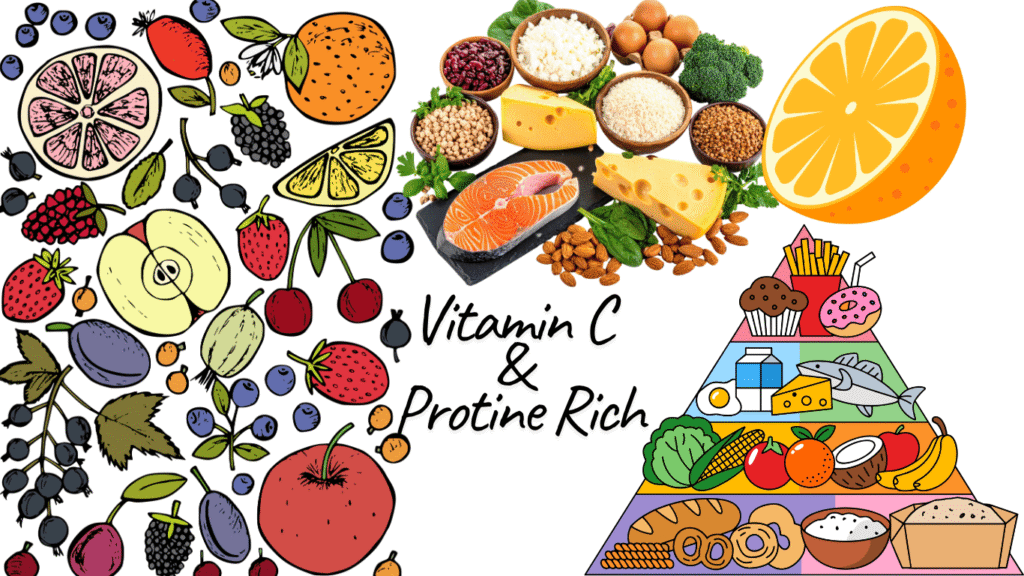
These fruits also contain vitamins (especially vitamin C) and antioxidants, which help in collagen formation and protect existing collagen from damage. For example, vitamin C supports the stabilization of collagen structure, while antioxidants reduce free radical damage: RH (protein) + •OH → R• + H₂O (this damage is reduced).
Antioxidant-Rich Frutis (Prevent Collagen Damage)
Antioxidant-rich fruits help improve skin elasticity by protecting collagen and elastin from damage caused by free radicals. Free radicals (like O₂•⁻ and •OH) are unstable molecules formed due to UV rays, pollution, and stress. These molecules attack our skin proteins through reactions such as: RH (collagen/elastin) + •OH → R• + H₂O, which turns healthy proteins into damaged ones and starts a chain reaction that breaks down the skin’s structure.
Antioxidants found in fruits (like vitamin C, vitamin E, flavonoids, and polyphenols Antioxidant-rich fruits that help improve skin elasticity include blueberries, strawberries, oranges, amla (Indian gooseberry), pomegranate, grapes (especially red and black), papaya, kiwi, and mango. These fruits are rich in vitamin C, flavonoids, and polyphenols, neutralize these free radicals by donating electrons. A key protective reaction is: ROO• + Antioxidant → ROOH + stable molecule. This stops the chain reaction before it can damage more collagen and elastin.
Healthy Fats (Improve Skin Flexibility)
Healthy fats help improve skin elasticity by strengthening the skin barrier, maintaining hydration, and supporting flexible cell structure. Skin cells are surrounded by a lipid (fat) membrane made mainly of fatty acids. These fats keep the membrane soft and fluid. A simple way to understand it is: Lipid (fat) + H₂O → stable, flexible membrane structure. When your body gets enough healthy fats (like omega-3 and omega-6 fatty acids), these lipids are properly maintained, making skin cells smooth and flexible instead of dry and rigid.
Healthy fats also reduce inflammation and oxidative stress, which protects collagen and elastin from damage. They help prevent reactions like: RH (protein) + •OH → R• + H₂O, meaning less breakdown of skin proteins. At the same time, they support the production of natural oils (sebum), which locks moisture into the skin and prevents dehydration—a key factor in maintaining elasticity.
Zinc & Mineral-Rich Foods (Skin Repair)
inc and mineral-rich fruits help improve skin elasticity by supporting skin repair, collagen production, and protection against damage at a cellular level. Zinc is an essential mineral that plays a key role in enzyme activity involved in tissue repair and protein synthesis. It helps fibroblast cells produce collagen by supporting reactions where amino acids combine to form proteins: Amino acids → peptide bonds → collagen fibers. Without enough zinc, this process slows down, leading to weaker skin structure.
Zinc also acts as an antioxidant and helps reduce oxidative stress, preventing damage like: RH (protein) + •OH → R• + H₂O. This means collagen and elastin are better protected from breakdown. In addition, zinc regulates inflammation, which helps control enzymes (like matrix metalloproteinases) that degrade collagen.
Other minerals like copper and selenium also play important roles. Copper helps in cross-linking collagen and elastin fibers, making them stronger and more stable, while selenium protects skin cells from oxidative damage.
FAQ On Increase Skin Elasticity
How can I improve skin elasticity?
You can improve skin elasticity by eating foods rich in vitamin C, protein, antioxidants, and healthy fats that support collagen production. Use skincare ingredients like retinol, vitamin C, hyaluronic acid, and peptides to boost and protect skin structure. Also stay hydrated and use sunscreen daily to prevent collagen damage from UV rays.
What destroys skin elasticity?
Skin elasticity is destroyed by UV rays, free radicals, and pollution that break down collagen and elastin. High sugar intake causes glycation, which makes skin proteins stiff and weak. Dehydration and inflammation also reduce skin repair and lead to sagging and wrinkles.
What vitamin gives skin elasticity?
Vitamin C is the most important vitamin for skin elasticity because it helps in collagen formation and protects skin from free radical damage. Vitamin A (retinol) also supports skin elasticity by boosting collagen production and improving skin cell turnover. Vitamin E helps by protecting skin fibers from oxidative stress and keeping skin soft and healthy.
What causes loss of skin elasticity?
UV rays, free radicals, sugar (glycation), dehydration, and aging break down collagen and elastin. These factors weaken skin structure and make it loose and saggy.
Which foods help increase skin elasticity?
Citrus fruits, amla, berries, eggs, nuts, fish, and avocado help boost collagen and keep skin firm and flexible.
Pingback: How to Protect Your Skin from Pollution - Healixcare
Pingback: Benefits of Papaya for Skin (Glow, Acne & Dark Spots) - Healixcare
Pingback: Fine Lines on Face: Causes & How to Reduce - Healixcare
Pingback: Skin Burn by Oil Causes, Treatment, Home Remedies - Healixcare
Pingback: Benefits of Face Yoga in skin Tighten & Shape Face - Healixcare
Pingback: Benefits of Face Yoga in skin Tighten & Shape Face – properhealth.pro
Pingback: How Hot Oil Damages the Skin – properhealth.pro