
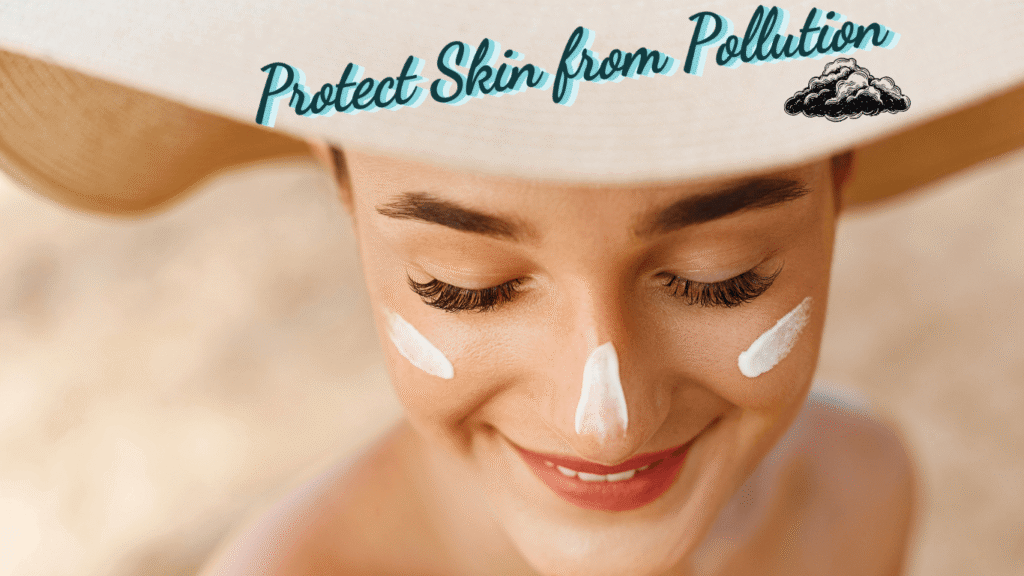
Your skin is under attack every single day. Pollution, made up of tiny particles like PM2.5, toxic gases, and heavy metals, they are settles on your skin and penetrates skin deep into its layers, silently damaging it from within. This damage mainly happens through a process called Oxidative Stress, where pollutants generate unstable molecules known as free radicals. These free radicals steal electrons from healthy skin cells, and triggering a harmful chain reaction that make our skin barrier weak, also causes dehydration, and leads to dullness, acne, and premature aging.
At a chemical level, free radicals react with the lipids (fats) in your skin in a process called lipid peroxidation, forming lipid peroxides that damage the protective barrier our skin and make skin dry and sensitive. They also activate the enzymes known as Matrix Metalloproteinases (MMPs), which break down collagen—the protein responsible for keeping your skin tighten and youthful—resulting in wrinkles and sagging. pollution can cause direct DNA damage in skin cells, leading to pigmentation issues and long-term skin problems. Over time, this continuous chemical reaction make natural defense system weak, making it more Likely to irritation, uneven tone, and early aging.
What Does Pollution Do to Your Skin?
Pollution may look like just dust and smoke, but it actually damages your skin through tiny chemical reactions happening on and inside our skin. When pollutants like dirt particles, smoke, and toxic gases settle on our skin, they trigger a process called Oxidative Stress. pollution creates a harmful molecules called free radicals. These free radicals are unstable compound, so they try to steal electrons from your healthy skin cells, which damages those cells and starts a chain reaction of more damage.
At the chemical level, one major reaction is called lipid peroxidation. This happens when free radicals react with the natural oils (lipids) in your skin. The reaction looks like this in simple form: lipids + free radicals → damaged lipids (lipid peroxides). This make weake our skin barrier, also making your skin dry, rough, and more sensitive. Pollution also activates certain enzymes called Matrix Metalloproteinases (MMPs), which break down collagen—the protein that keeps your skin tighten and smooth. As collagen breaks down, you start seeing wrinkles, fine lines, and sagging.
Signs of Pollution-Damaged Skin
Dull & Tired-Looking Skin
When pollution settles on your skin, it triggers Oxidative Stress, producing free radicals. These molecules damage skin cells and slow down oxygen and nutrient supply. As a result, cell renewal becomes weak, and dead cells build up on the surface—making your skin look dull, grey, and tired.
Dryness & Dehydration
Pollution causes a reaction called lipid peroxidation. In simple terms: skin lipids (natural oils) + free radicals → damaged lipids (lipid peroxides). This breaks down your skin’s protective barrier, allowing moisture to escape easily, which makes your skin feel dry, tight, and flaky.
Acne & Clogged Pores
Pollutants mix with sebum (oil) and undergo oxidation, making the oil thicker and stickier. This clogs pores and traps bacteria. At the same time, pollution increases inflammatory chemicals in the skin, leading to redness, acne, pimples, and breakouts.
Uneven Skin Tone & Pigmentation
Free radicals stimulate melanocytes (pigment cells) to produce more melanin as a defense response. Over time, this excess melanin leads to dark spots and uneven skin tone, especially with continuous exposure to pollution.
Premature Aging (Wrinkles & Fine Lines)
Pollution activates enzymes called Matrix Metalloproteinases (MMPs). Free radicals trigger these enzymes, which break down collagen—the protein responsible for firm skin. As collagen decreases, wrinkles and fine lines start appearing earlier.
Sensitivity & Redness
Pollution increases inflammatory reactions by releasing cytokines (skin signaling chemicals). These irritate the skin, weaken the barrier, and make it more sensitive to products, heat, and sunlight, causing redness and irritation.
Loss of Skin Elasticity
Free radicals damage collagen and elastin fibers through oxidation. As these structural proteins break down, your skin loses firmness and its ability to bounce back, leading to sagging.
Enlarged Pores
Oxidized oil and dirt clog pores, while collagen breakdown around pores reduces skin support. This makes pores stretch and appear larger over time.
How to Protect Your Skin from Pollution
Cleanse Your Skin Properly
Properly cleansing your skin is one of the most effective ways to protect it from pollution because it removes harmful particles before they trigger Oxidative Stress and start damaging your skin. Throughout the day, pollutants like dust, smoke, and toxic particles settle on your skin and mix with sebum (oil). If not removed, they activate oxidation (sebum + oxygen + pollutants → oxidized sebum), making the oil thick and sticky, which clogs pores and leads to acne. Cleansing helps remove this buildup early and prevents pore blockage.
It also helps stop lipid peroxidation, where free radicals attack your skin’s natural oils (skin lipids + free radicals → lipid peroxides), weakening the skin barrier and causing dryness and sensitivity. By washing away pollutants, cleansing reduces free radical formation and protects your skin barrier. In addition, proper cleansing lowers the activation of Matrix Metalloproteinases (MMPs), enzymes that break down collagen and lead to wrinkles and sagging. Cleansing also removes trapped particles from pores, reducing inflammation, redness, and irritation.
Use Antioxidant-Rich Skincare
Using antioxidant-rich skincare is one of the best ways to protect your skin from pollution because it directly fights damage caused by Oxidative Stress. When pollutants settle on your skin, they generate free radicals—unstable molecules that damage cells by stealing electrons. Antioxidants work by donating electrons to these free radicals, neutralizing them and stopping the damage chain reaction.
At a chemical level, the reaction is:
free radical + antioxidant → stable molecule
This helps prevent lipid peroxidation (damage to skin oils), keeping your skin barrier strong and reducing dryness and sensitivity.Antioxidants also protect collagen by stopping activation of Matrix Metalloproteinases (MMPs), enzymes that break down collagen due to pollution. This helps prevent wrinkles, fine lines, and loss of firmness.
They also reduce inflammation caused by pollution, which can lead to redness, irritation, and acne. Common antioxidant ingredients include vitamin C, vitamin E, niacinamide, green tea extract, and resveratrol. Regular use acts like a shield—neutralizing free radicals, reducing chemical damage, and keeping skin healthy and youthful.
Apply Sunscreen Daily
Applying sunscreen daily is essential to protect your skin from pollution damage because sunlight (UV rays) and pollution together create stronger Oxidative Stress. When UV rays hit your skin, they generate free radicals, and pollution increases this effect—leading to faster skin damage.
At a chemical level, UV radiation reacts with oxygen in your skin to form reactive oxygen species (ROS):
UV rays + oxygen → free radicals (ROS)
These free radicals then attack skin cells, lipids, and proteins, causing damage like dryness, pigmentation, and aging. Sunscreen works by either absorbing or reflecting UV rays, stopping this reaction before it starts.By blocking UV rays, sunscreen helps prevent lipid peroxidation (damage to skin oils), which keeps your skin barrier strong and reduces moisture loss. It also protects collagen by reducing the activation of Matrix Metalloproteinases(MMPs)—enzymes that break down collagen and lead to wrinkles and sagging.
Sunscreen also helps control pigmentation because UV rays stimulate melanin production. When combined with pollution, this effect becomes stronger, causing dark spots and uneven skin tone. Daily sunscreen use reduces this risk and keeps your skin tone even.
Moisturize to Strengthen Skin Barrier
Moisturizing daily is essential to strengthen your skin barrier and protect it from pollution damage because it helps repair and seal the outer layer of your skin. When your skin is exposed to pollutants, they trigger Oxidative Stress, producing free radicals that damage lipids (natural oils) in your skin. This leads to a reaction called lipid peroxidation, where skin lipids + free radicals → damaged lipids, weakening the barrier and causing dryness and sensitivity.
A good moisturizer works by replenishing these lost lipids and forming a protective layer that reduces water loss. It helps restore the skin barrier structure (made of ceramides, fatty acids, and cholesterol), making it harder for pollutants to penetrate. Chemically, moisturizers help interrupt the chain reaction of free radicals by supporting the skin’s natural repair system and sometimes providing mild antioxidant effects.Moisturizing also reduces inflammation caused by pollution. When the barrier is damaged, the skin releases inflammatory chemicals that cause redness and irritation. By keeping the barrier strong and hydrated, moisturizers calm this response and make skin less reactive.
Best Ingredients to Protect Skin from Pollution
| Ingredient | How It Protects Skin | Chemical Reaction / Effect |
|---|---|---|
| Vitamin C | Neutralizes free radicals, brightens skin, boosts collagen | free radical + vitamin C → stable molecule (reduces Oxidative Stress) |
| Vitamin E | Protects skin oils and strengthens barrier | Prevents lipid peroxidation (skin lipids + free radicals → blocked damage) |
| Niacinamide | Strengthens barrier, reduces oil & inflammation | Increases ceramides, reduces inflammatory reactions |
| Green Tea Extract | Calms skin and fights damage | Polyphenols neutralize free radicals |
| Resveratrol | Anti-aging, protects skin cells | Reduces oxidative reactions and cell damage |
| Ceramides | Repair and strengthen skin barrier | Restore lipid layer, prevent moisture loss |
| Hyaluronic Acid | Deep hydration, barrier support | Maintains water balance, reduces dryness damage |
| Activated Charcoal / Clay | Removes dirt and toxins | Absorbs pollutants, prevents pore-clogging reactions |
| Ferulic Acid | Boosts antioxidant power | Stabilizes and enhances vitamin C & E action |
FAQ about How to Protect Your Skin from Pollution
How do I protect my skin from pollution?
Protect your skin from pollution by cleansing your face twice daily to remove dirt and toxins, using antioxidant-rich products like Vitamin C, and applying sunscreen every day. Keep your skin hydrated with a good moisturizer and follow a healthy diet to strengthen your skin from within.
What are 5 ways to prevent pollution?
You can prevent pollution by reducing vehicle use, saving energy, avoiding single-use plastics, planting more trees, and managing waste properly through recycling and reuse.
How to protect your skin from environmental damage?
Protect your skin from environmental damage by cleansing daily to remove dirt and pollutants, using antioxidant-rich products like Vitamin C, and applying sunscreen to guard against UV rays. Keep your skin hydrated with a good moisturizer, avoid overexposure to harsh weather, and maintain a healthy diet to support skin repair and strength.
Does vaseline attract UV rays?
No, Vaseline does not attract or increase UV rays, but it also does not provide any sun protection, so you should still use sunscreen during the day.
How can I protect my skin from pollution naturally?
You can protect your skin naturally by cleansing regularly, using antioxidant-rich ingredients, staying hydrated, and eating a healthy diet rich in fruits and vegetables.
Does pollution cause acne?
Yes, pollution can clog pores, increase oil production, and lead to acne, blackheads, and breakouts.
Which ingredients protect skin from pollution?
Ingredients like Vitamin C, niacinamide, green tea extract, and hyaluronic acid help protect the skin from pollution damage.
Pingback: Coconut Oil for Blackhead Removal Naturally - Healixcare
Pingback: Benefit of Organic Green Tea for Skin - Healixcare
Pingback: Beetroot for Skin The Natural Glow Booster - Healixcare
Pingback: Benefits of Vitamin A for Removing Dead Skin Cells - Healixcare
Pingback: How to Use Multani Mitti for Clear Skin - Healixcare
Pingback: Rose Petals for Skin Benefits You Should Know - Healixcare
Pingback: Aloe Vera for Skin Benefits and DIY Face Packs - Healixcare
Pingback: Fine Lines on Face: Causes & How to Reduce - Healixcare
Pingback: Benefits Of Vitamin C Rich Foods for Skin - Healixcare
Pingback: Tomato Benefits for Skin Natural Glow - Healixcare