
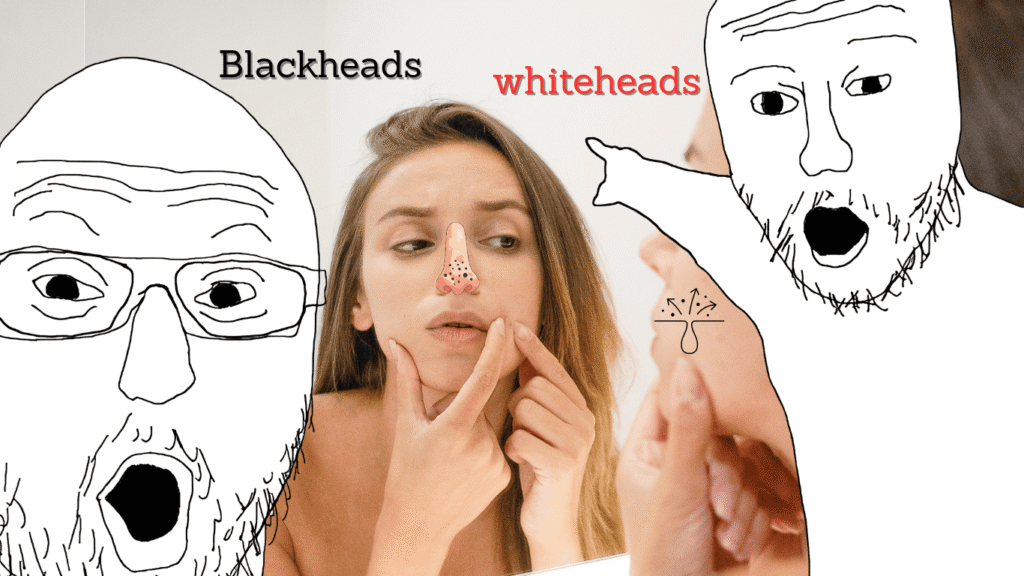
Blackheads and whiteheads are the common types of acne Both are forms of comedonal acne. Blackheads medically known as (Open Comedones), whiteheads known as (Closed Comedones) can happen on people of all ages, especially occurs during hormonal changes like puberty, which occurs when pores become clogged with excess oil, dead skin cells, and sometimes bacteria. While they may look similar at first, the main difference lies in whether the clogged pore is open or closed at the skin’s surface. Understanding how any visible mark, spot, or discoloration form, why they appear in certain areas, and what triggers them is essential for effective prevention and treatment.
Formation of Blackheads and Whiteheads
Blackheads (Open Comedones)
Blackheads are small, dark spots that appear on the skin. They are caused by the dark color that forms when skin pigment in clogged pores reacts with air. These spots are commonly found on areas of the face that produce more oil, such as the nose, forehead, and chin. Blackheads occur when excess sebum (oil) and dead skin cells block the pore, and exposure to air causes oxidation, turning the material inside the pore dark.
Whiteheads (Closed Comedones)
Whiteheads are small, white or flesh-colored bumps that appear on the skin. They form when pores become clogged with oil (sebum) and dead skin cells, but unlike blackheads, the pore is closed by a thin layer of skin. Because of this, the material inside is not exposed to air, so it does not oxidize and remains white or skin-colored. Whiteheads are commonly found on the cheeks, forehead, and jawline.
Causes of Blackheads and Whiteheads
Both blackheads and whiteheads are types of comedones, and they share some common causes related to how the skin produces oil and sheds cells.
Common Causes (Both Blackheads & Whiteheads)
- Excess Oil (Sebum) Production:
The skin naturally produces oil to keep itself moisturized. However, when too much sebum is produced, it can mix with dead skin cells and clog the pores. - Dead Skin Cell Buildup:
The skin continuously sheds dead cells. If these cells are not removed properly, they can accumulate and block pores, leading to comedones. - Hormonal Changes or Imbalance:
Hormones, especially androgens, can increase oil production. This is common during puberty, menstruation, pregnancy, or conditions like hormonal acne.
Causes of Blackheads (Open Comedones)
Blackheads form when pores on the skin remain open and become clogged with a mixture of excess oil (sebum) and dead skin cells. In people with oily skin, the skin produces more oil than needed, which easily mixes with these dead cells and blocks the pores. When proper exfoliation is not done, dead skin cells build up on the surface, increasing the chances of clogging. Since the pore stays open, the trapped material inside comes in contact with air, leading to oxidation. This oxidation process turns the material dark, resulting in the formation of blackheads.
Causes of Whiteheads (Closed Comedones)
Whiteheads form when pores become clogged but remain closed at the surface due to a thin layer of skin. This traps oil (sebum), dead skin cells, and sometimes bacteria inside the pore, preventing air from entering, so the material does not oxidize and stays white or flesh-colored. Hormonal changes, especially during puberty, menstruation, or hormonal imbalance, can increase oil production and trigger whiteheads, often appearing around the cheeks and jawline. Stress also plays a role, as it raises cortisol levels in the body, which can lead to excess oil production and further clogging of pores. Additionally, using comedogenic skincare products—such as heavy creams, oils, or certain makeup—can block pores and trap impurities inside the skin, increasing the chances of whitehead formation.
Symptoms OF Blackheads and Whiteheads
Blackheads
Blackheads are small, visible bumps that appear on the surface of the skin, usually in areas with more oil production like the nose, forehead, and chin. The most noticeable symptom is their dark or black color, which is not dirt but the result of oxidation when the clogged pore is exposed to air. They have a slightly raised texture and are usually painless, without redness or swelling like inflamed acne. The skin may feel slightly rough or uneven to the touch, especially if multiple blackheads are present in one area. If not cleaned or managed properly, blackheads can worsen over time and may lead to more noticeable clogged pores or even develop into other forms of acne.
Whiteheads
Whiteheads are small, white or flesh-colored bumps that form when pores become clogged and remain closed at the surface. Because the pore is covered by a thin layer of skin, the trapped oil, dead skin cells, and bacteria do not come in contact with air, so they do not turn dark like blackheads. They are usually slightly raised with a smooth or firm texture and commonly appear on the cheeks, forehead, and jawline. Whiteheads are generally painless, but they may sometimes feel tender or itchy if irritated. In some cases, they can become inflamed and have a risk of turning into pimples if not treated properly.
Treatment for Blackheads & Whiteheads (Complete Guide)
Blackheads (open pores) and whiteheads (closed pores) are both types of clogged pores. So, their treatment is quite similar — the goal is to clean pores, control oil, and prevent buildup.
Gentle Cleansing & Exfoliationa Week
tart with a gentle cleanser twice a day to remove excess oil, dirt, and impurities that clog pores. This keeps your skin clean and helps prevent both blackheads and whiteheads.
Exfoliation is essential to remove dead skin cells that block pores. Use chemical exfoliants like salicylic acid (BHA) 2–3 times a week, as they work deep inside pores and are more effective than harsh scrubs.
Use Salicylic Acid, Benzoyl Peroxide & Clay Masks
Salicylic acid is the most effective ingredient for both blackheads and whiteheads. It penetrates deep into pores, dissolves oil, and clears clogged debris.
Benzoyl peroxide helps kill acne-causing bacteria and is useful when whiteheads become inflamed or turn into pimples.
Clay masks (like Multani mitti or charcoal) help absorb excess oil and draw out impurities from the skin, reducing pore blockage and making skin smoother.
Retinoids, Moisturize & Sunscreen
Retinoids (such as adapalene) increase skin cell turnover and prevent pores from getting clogged, making them highly effective for long-term treatment of both conditions.
Moisturizing is important even for oily skin. Use a lightweight, oil-free, non-comedogenic moisturizer to keep your skin balanced and avoid excess oil production.
Sunscreen protects your skin from sun damage, prevents dark spots, and supports healing. Always use SPF 30 or higher daily.
Home Remedies for Blackheads & Whiteheads

Honey helps us to maintain moisture in the skin and keep it soft & hydrated. honey have antibacterial and anti-inflammatory properties that help acne-prone skin by reducing bacteria and calming irritation. While lemon is rich in vitamin C and citric acid, that remove dead skin cells. it help to reduce excess oil and dark spots over time .
To make the mask, mix one tablespoon of raw honey with one teaspoon of freshly squeezed lemon juice in a clean bowl. Stir well until you get a smooth mixture. Before applying, cleanse your face thoroughly and pat it dry. Apply a thin, even layer of the mask to your face, avoiding the eye area. Leave it on for about 10–15 minutes, then rinse off with lukewarm water and gently pat your skin dry.
use this mask 2–3 times a week, lemon can be slightly acidic and may cause sensitivity, it is important to do a patch test before first use and always apply sunscreen after using this mask, as lemon can make your skin more sensitive to sunlight.
Steam Treatment
Steam treatment for skin is a simple and effective way to deeply cleanse and refresh your face at home. It involves exposing your skin to warm steam, which helps open up pores and loosen dirt, oil, and impurities trapped inside. This process makes it easier to remove blackheads and whiteheads while also improving blood circulation, giving your skin a natural, healthy glow.
Steaming can also enhance the absorption of skincare products like serums and moisturizers, making them work more effectively. To do it, you can lean over a bowl of hot water with a towel over your head for about 5–10 minutes or use a warm towel on your face. However, it’s important not to overdo it—once or twice a week is enough for most skin types. Always keep a safe distance from the steam to avoid burns and apply a moisturizer afterward to lock in hydration.
Baking Soda Scrub
Baking soda scrub is a popular home remedy used for exfoliating the skin and helping to remove dead skin cells, excess oil, and impurities. Its slightly gritty texture works as a natural exfoliant, which can help unclog pores and reduce the appearance of blackheads and whiteheads. To use it, mix a small amount of baking soda with water to form a paste, gently massage it onto damp skin in circular motions for about 1–2 minutes, and then rinse with lukewarm water.
While it can leave the skin feeling smooth and refreshed, baking soda is alkaline in nature and may disrupt the skin’s natural pH balance if used too often. Therefore, it is best to use this scrub only once a week and follow up with a gentle moisturizer to prevent dryness or irritation, especially for sensitive skin.
Multani Mitti (Fuller’s Earth) Mask
Multani Mitti (Fuller’s Earth) mask is a natural and traditional skincare remedy widely used for oily and acne-prone skin. It is known for its excellent oil-absorbing properties, which help remove excess sebum, dirt, and impurities from the pores, making the skin feel clean and refreshed. This clay also has a cooling effect on the skin, which can help soothe irritation, reduce acne, and improve overall skin texture.
To use it, mix Multani Mitti with rose water or plain water to form a smooth paste, apply it evenly on the face, and leave it on until it dries completely before rinsing with lukewarm water. Regular use, about once or twice a week, can help control oil, tighten pores, and give the skin a natural glow. However, people with dry or sensitive skin should use it cautiously and always follow up with a moisturizer to avoid excessive dryness.
FAQs for blackheads and whiteheads
Remove blackheads from nose at home
To remove blackheads from your nose at home, cleanse your face daily and use a salicylic acid exfoliant 2–3 times a week to unclog pores. Apply a clay mask weekly and try gentle steaming to loosen buildup. Avoid squeezing, and always moisturize to keep your skin balanced.
Can oily skin cause more blackheads and whiteheads?
Yes, oily skin produces more sebum, which increases the chances of clogged pores and formation of both blackheads and whiteheads.
How to remove whiteheads permanently
Whiteheads can’t be removed permanently, but you can control and prevent them long-term with the right routine. Cleanse your face twice daily, use salicylic acid or retinoids to keep pores clear, and exfoliate 2–3 times a week. Avoid heavy, pore-clogging products and always use a lightweight moisturizer and sunscreen to maintain clear skin.
How to remove blackheads permanently
To remove blackheads, cleanse your face twice daily and use a salicylic acid exfoliant 2–3 times a week to unclog pores. Apply a clay mask weekly to absorb excess oil and reduce buildup. Avoid squeezing, and keep your skin balanced with a lightweight moisturizer and sunscreen.
Whiteheads on nose
Whiteheads on the nose are small, closed pores filled with oil and dead skin. To reduce them, cleanse your face twice daily and use a salicylic acid or retinoid treatment to unclog pores. Exfoliate 2–3 times a week, avoid heavy products, and keep your skin hydrated with a lightweight, non-comedogenic moisturizer.
Pingback: How Scalp Health Affects Facial Skin - Healixcare
Pingback: Coconut Oil for Blackhead Removal Naturally - Healixcare
Pingback: Curd Benefits for Skin To Glow Naturally - Healixcare
Pingback: Rose Petals for Skin Benefits You Should Know - Healixcare
Pingback: Benefits of Fitkari (Alum) for Skin: Glow, Acne Control - Healixcare
Pingback: How To Use Banana Peel Face Mask for Clear Skin - Healixcare
Pingback: How to Treat Acne Naturally 10 Home Remedies - Healixcare
Pingback: What does beta-hydroxy acid do for skin? - Healixcare
Pingback: Benefits of Vitamin A in Skin for Removing Dead Skin - Healixcare