
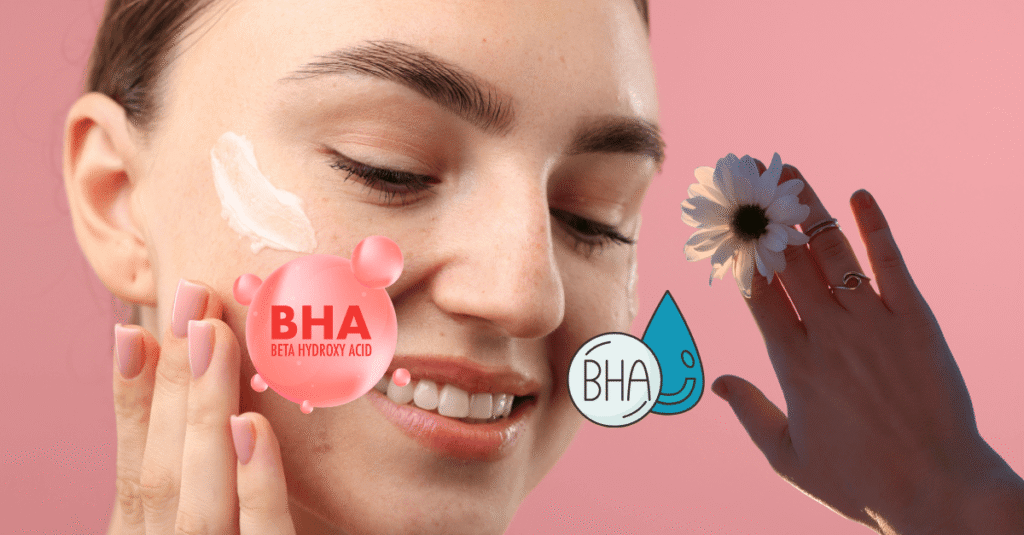
What Is Beta-Hydroxy Acid (BHA)?
Beta-hydroxy acid (BHA), mainly salicylic acid, helps the skin by going deep inside the pores where oil, dirt, and dead skin cells get stuck. Because it is oil-soluble, it easily mixes with the skin’s natural oil (sebum) and starts breaking down the blockage inside pores. In simple terms, it works like a deep cleaner that clears blackheads, whiteheads, and acne by dissolving excess oil and loosening the “glue” that holds dead skin cells together.
Chemically, salicylic acid (C₇H₆O₃) does two main things: first, it mixes with sebum to help dissolve the oily clog inside pores; second, it weakens keratin protein bonds between dead skin cells through a mild keratolytic action, which allows the cells to separate and shed naturally. This process clears the pore from inside, reduces bacteria buildup, calms inflammation, and helps the skin become smoother, clearer, and less acne-prone over time.
Difference Between BHA and AHA
| Feature | BHA | AHA |
|---|---|---|
| Full Form | Beta-Hydroxy Acid | Alpha-Hydroxy Acid |
| Solubility | Oil-soluble | Water-soluble |
| Works Best For | Oily, acne-prone skin | Dry, dull, aging skin |
| Penetration | Goes deep into pores | Works on skin surface |
| Main Benefit | Unclogs pores, controls oil | Brightens and smooths skin |
How Does Beta-Hydroxy Acid Work on the Skin?
Oil-Soluble Exfoliation
Beta-hydroxy acid (BHA), mainly salicylic acid, helps in oil-soluble exfoliation because it can dissolve in the skin’s natural oil (sebum) and enter deep inside the pores where normal water-based exfoliants cannot reach. Once inside, it mixes with the oily clog made of sebum, dead skin cells, and dirt, and starts breaking it down so the pore gets cleared from within.
The chemical action happens like this in simple terms: salicylic acid (C₇H₆O₃) has both oil-loving and acid properties, so it dissolves in sebum and interacts with the fatty and protein-based buildup inside the pore. It then weakens the keratin protein bonds that hold dead skin cells together, leading to a mild keratolytic reaction:
Keratin (dead skin cell bonds) + Salicylic Acid (C₇H₆O₃) → weakened bonds → shedding of dead skin cells
Because of this reaction, the clogged material breaks apart, the pore gets cleaned, and blackheads, acne, and excess oil reduce over time, leaving the skin clearer and smoother
Deep Pore Cleansing
Beta-hydroxy acid (BHA), mainly salicylic acid, helps in deep pore cleansing because it can go inside the pores instead of just working on the skin surface. Since it is oil-soluble, it easily mixes with sebum (skin oil) and enters deep into clogged pores where oil, dirt, and dead skin cells are trapped. Once inside, it starts breaking down this blockage and clears the pore from within.
The chemical action behind this is simple: salicylic acid (C₇H₆O₃) dissolves in sebum and interacts with the oily and protein-based buildup inside the pore. It weakens the keratin “glue” that holds dead skin cells together and breaks the clogged mixture through a mild keratolytic reaction:
Sebum + Dead skin cells + Salicylic acid (C₇H₆O₃) → loosened bonds → breakdown of pore blockage → cleared pore
Because of this reaction, the trapped oil and dead cells get loosened and removed naturally, which deeply cleans the pores, reduces blackheads and acne, and keeps the skin clearer and smoother.
Removal of Dead Skin Cells
Beta-hydroxy acid (BHA), mainly salicylic acid, helps remove dead skin cells by gently loosening them from the surface of the skin and from inside the pores. Normally, dead skin cells stick together with a natural “glue” made of proteins like keratin. When these cells do not shed properly, they build up and make the skin look dull and can also clog pores.
Chemically, salicylic acid (C₇H₆O₃) works as a keratolytic agent, meaning it breaks the bonds between dead skin cells. It interacts with the keratin protein structure and weakens the forces holding the cells together, leading to a soft breakdown process:
Keratin (protein bonds in dead skin cells) + Salicylic acid (C₇H₆O₃) → weakened cell connections → separation of dead skin cells → natural shedding
Because of this reaction, dead skin cells loosen and are removed more easily through natural skin shedding. This reveals fresher skin underneath, improves skin texture, reduces dullness, and helps prevent clogged pores and acne formation.oother, and more refined.
Benefits of Beta-Hydroxy Acid for Skin
1. Reduces acne and breakouts
Beta-Hydroxy Acid (BHA), mainly known as salicylic acid, penetrates deep into the pores where acne begins. It dissolves excess oil, dead skin cells, and debris that clog pores, helping prevent new pimples and reduce existing breakouts.
2. Unclogs pores and blackheads
Because BHA is oil-soluble, it can travel through sebum inside the pore lining. This makes it highly effective at clearing blackheads, whiteheads, and congestion from within rather than just exfoliating the surface.
3. Controls excess oil
BHA helps regulate sebum production, which is especially helpful for oily and combination skin types. With regular use, skin looks less greasy and stays matte for longer periods.
4. Improves skin texture
By gently exfoliating dead skin cells, BHA smooths rough patches and uneven areas. Over time, it promotes a softer, more refined, and healthier-looking skin texture.
5. Minimizes the appearance of pores
When pores are free from buildup and excess oil, they appear smaller and less noticeable. BHA keeps pores clean, which improves overall skin clarity.
6. Reduces inflammation and redness
Salicylic acid has natural anti-inflammatory properties. It helps calm irritated skin, reduce redness, and soothe swelling associated with active acne.
Is Beta-Hydroxy Acid Good for Acne-Prone Skin?
Yes, Beta-Hydroxy Acid (BHA)—especially salicylic acid—is one of the best ingredients for acne-prone skin. It is oil-soluble, which means it can penetrate deep into pores and clear out excess oil, dirt, and dead skin cells that cause breakouts.
How it treats active acne
Beta-Hydroxy Acid works effectively on active pimples in several ways:
- Unclogs pores: It dissolves the buildup of oil and dead skin cells inside pores.
- Reduces inflammation: It calms redness and swelling associated with acne.
- Controls excess oil: It helps reduce sebum production, which is a major cause of breakouts.
- Targets blackheads and whiteheads: Since it goes deep into pores, it clears comedones from within.
This makes it especially helpful for oily and acne-prone skin types.
Preventing future breakouts
Using BHA regularly can also help prevent new acne from forming- Keeps pores clear and clean, Minimises congestion and buildup, Smooths skin texture over time
- Improves overall skin clarity
For best results, use a 1–2% salicylic acid product 2–3 times a week (or as tolerated), followed by a good moisturizer and sunscreen during the day.
Beta-Hydroxy Acid for Oily vs Dry Skin
Beta-Hydroxy Acid (BHA), commonly known as salicylic acid, is an oil-soluble exfoliating acid that works inside the pores. It removes excess oil, dead skin cells, and impurities that lead to clogged pores and acne. However, how it performs depends on your skin type.
Best for Oily and Combination Skin
BHA is especially beneficial for oily and combination skin because these skin types produce more sebum.
Why it works well:
- Penetrates deep into oily pores and dissolves excess sebum
- Reduces blackheads, whiteheads, and acne
- Helps control shine and greasy appearance
- Minimizes enlarged-looking pores
- Gently exfoliates without harsh scrubbing
With regular use (2–3 times weekly), skin looks clearer, smoother, and less congested. Many dermatologists recommend BHA as a primary exfoliant for acne-prone and oily skin because it targets oil at the source.
Can Dry Skin Use BHA?
Yes, dry skin can use BHA—but carefully and strategically.
Dry skin usually lacks oil, so strong or frequent BHA use may cause:
- Increased dryness
- Flaking or peeling
- Skin barrier irritation
- Tightness after application
How dry skin can safely use BHA:
- Choose a low concentration (0.5–1%)
- Use once or twice a week only
- Apply on clean, dry skin
- Follow immediately with a rich moisturizer
- Avoid mixing with retinol or strong AHAs at first
BHA can still benefit dry skin if clogged pores, blackheads, or occasional acne are concerns. In such cases, using it sparingly helps clear congestion without over-exfoliating.
If dryness is your main issue and you don’t struggle with clogged pores, an AHA (like glycolic acid) may be more suitable because it works on the skin surface and improves hydration levels.
Possible Side Effects of Beta-Hydroxy Acid
Beta-Hydroxy Acid (BHA), mainly salicylic acid, is generally safe and effective for acne-prone skin, but like any active ingredient, it can cause some side effects—especially if overused or used incorrectly. The most common side effects include mild dryness, peeling, and slight redness, particularly during the first few weeks of use as the skin adjusts. Some people may also experience a tingling or stinging sensation right after application, which is usually temporary.
If used too frequently or in high concentrations, BHA can weaken the skin barrier, leading to irritation, increased sensitivity, and excessive flaking. People with sensitive or very dry skin may notice tightness or patchy dryness. In rare cases, allergic reactions such as itching, swelling, or severe redness can occur, and use should be stopped immediately.
Since BHA exfoliates the skin, it can also make the skin more sensitive to sunlight. Therefore, applying sunscreen during the day is essential to prevent sun damage. To minimize side effects, start with a low concentration, use it only a few times per week, and always follow with a moisturizer to keep the skin balanced.
BHA vs AHA: Which One Is Better for Your Skin?
Both Alpha-Hydroxy Acids (AHA) and Beta-Hydroxy Acids (BHA) are chemical exfoliants, but they work differently and suit different skin types. AHAs are water-soluble acids that exfoliate the surface of the skin, helping to remove dead skin cells, improve dullness, reduce fine lines, and enhance overall brightness. They are generally better suited for normal to dry skin because they also support hydration and improve skin texture.
BHA, mainly salicylic acid, is oil-soluble and works deeper inside the pores. It dissolves excess oil, clears clogged pores, and reduces acne and blackheads. This makes BHA more suitable for oily, acne-prone, and combination skin types. It also has anti-inflammatory properties, which help calm redness and active breakouts.
FAQs About Beta-Hydroxy Acid for Skin
What does beta-hydroxy acid do for skin?
Beta-hydroxy acid (BHA) penetrates deep into pores to dissolve excess oil, remove dead skin cells, and reduce acne, blackheads, and inflammation.
Can I use beta hydroxy acid every day?
It depends on your skin type; oily skin may tolerate daily use, but most people benefit from using it 2–3 times per week to avoid irritation.
Is BHA and salicylic acid the same?
Salicylic acid is the most common type of BHA used in skincare, so they are often used interchangeably.
Which one is better, AHA or BHA?
AHA is better for dry and dull skin, while BHA is better for oily, acne-prone, and clogged pores.
Is beta hydroxy acid safe to use?
Yes, BHA is generally safe when used in recommended concentrations and followed with sunscreen during the day.
Pingback: Atopic Dermatitis (Eczema) Signs, and Best Treatment - Healixcare
Pingback: How Scalp Health Affects Facial Skin - Healixcare
Pingback: Home Remedies to Minimize Open Pores Naturally - Healixcare
Pingback: Benefit of Organic Green Tea for Skin - Healixcare