
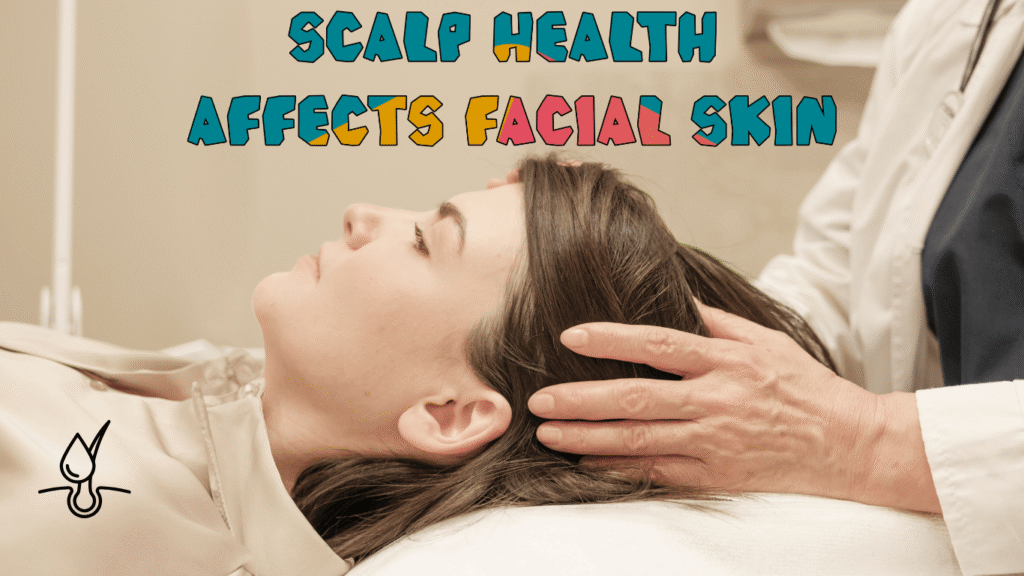
The scalp and facial skin are closely connected because they are actually part of the same continuous skin system. Both scalp and facial skin have the same structure with layers like the epidermis and dermis, and both contain hair follicles, sebaceous (oil) glands, and a shared skin microbiome. that’s why any imbalance in the scalp can easily affect the face skin. For example, the scalp produces a large amount of sebum (natural oil), Oil and dirt from your scalp can move down along your hairline and reach your forehead and temples. This can make your skin oily and may cause pimples or acne in those areas.
Similarly, when the scalp has issues like dandruff or fungal overgrowth, it can also disturb our skin’s microbial balance, leading to irritation or breakouts on the face. Inflammation on the scalp can also increase overall skin sensitivity, which may show up as redness or acne on facial skin. Even hormones and stress affect both areas together by increasing oil production and inflammation. That’s why maintaining scalp health often directly improves facial skin condition.
Link Between Scalp and Facial Skin Affects
Excess Oil Production on the Scalp
Excess oil production on the scalp occurs happens when sebaceous glands become overactive due to factors like hormonal changes, stress, genetics, or product buildup. This excess sebum doesn’t always stay on the scalp—it can slowly travel down the hair shafts and mix with sweat, dead skin cells, and hair products. When hair touches the forehead, especially with bangs or oily roots, this oil gets transferred directly onto the facial skin along the hairline. Over time, this mixture of sebum and impurities can settle into pores, blocking them and preventing proper skin breathing. Once pores are clogged, it creates an ideal environment for acne-causing bacteria to grow, leading to blackheads, whiteheads, and forehead breakouts. This is why people with oily scalps often experience acne along the forehead and temples, even if their facial skincare routine is good.
Dandruff and Scalp Buildup
When dead skin cells (Dandruff) form on the scalp, they don’t stay there—they fall due to gravity, friction (combing, scratching), and movement of hair. These Dandruff land on nearby areas like the forehead, eyebrows, nose bridge, and hairline. Once on facial skin, they mix with sebum (oil) and sweat, creating a sticky layer that can block pores. This blockage traps bacteria inside the pore, which can trigger blackheads, whiteheads, or acne-like bumps.
At the same time, dandruff is often regularly with an overgrowth of a yeast called Malassezia, which feeds on scalp oils. When flakes carrying this yeast come into contact with facial skin, especially oily areas, they can irritate the skin barrier and trigger inflammation. This leads to redness, itching, and sometimes small uniform bumps that resemble “fungal acne.”
Scalp Inflammation and Acne Trigger
Scalp inflammation can contribute to facial acne because the scalp and face share a connected skin barrier system, immune response, and microbial environment. When the scalp becomes inflamed due to dandruff, seborrheic dermatitis, excess oil, or product buildup, the body releases inflammatory signals like cytokines to fight irritation. These inflammatory mediators don’t stay limited to the scalp—they can spread locally through surrounding skin and blood circulation, increasing overall skin sensitivity in nearby areas like the forehead and hairline.
This continuous inflammatory make our skin barrier weak on both the scalp and face. A weakened barrier allows easier penetration of bacteria, irritants, and excess oil into pores, which leads to clogged pores and acne formation. In addition, inflammation disrupts the balance of the skin microbiome, allowing acne-causing bacteria such as Cutibacterium acnes to multiply more easily on the facial skin.
Scalp inflammation also increases the oil production as the body tries to protect and heal the irritated area. This excess sebum can move onto the forehead and mix with dead skin cells, further blocking pores. Over time, this creates a cycle where scalp inflammation continuously supports facial acne development through immune response, barrier damage, and oil imbalance.
Hair Products Causing Skin Breakouts
Hair products like shampoos, conditioners, hair oils, and styling products can cause facial breakouts when they come into contact with the skin, especially around the forehead, temples, and hairline. During washing or sweating, these products can run down from the scalp onto the face. Many of them contain ingredients like silicones, heavy oils, fragrances, and sulfates that are not meant for facial skin. When these substances sit on the skin, they can mix with natural sebum and form a thin film that blocks pores.
Once pores are blocked, oil and dead skin cells get trapped inside, creating an ideal environment for bacteria to grow, which leads to acne, blackheads, or small bumps along the hairline. Some hair oils are especially comedogenic, meaning they easily clog pores even in small amounts. Additionally, leave-in conditioners or styling sprays can transfer onto the pillow while sleeping, causing indirect contact with facial skin for long periods. This repeated exposure make our skin barrier weak and increases irritation, redness, and breakouts over time.
Signs Your Scalp is Affecting Your Facial Skin
Hairline acne
Hairline acne is one of the clearest signs that your scalp and hair routine may be affecting your facial skin. It usually appears as small pimples, whiteheads, or tiny inflamed bumps along the forehead, temples, and around the edges of the scalp. This happens when our excess scalp oil, dandruff flakes, or hair product residue flows onto the skin and mixes with sweat and dead skin cells, leading to clogged pores. Another strong sign is if breakouts are concentrated only near the hairline while the rest of the face stays relatively clear. Itching or flaking on the scalp along with forehead acne can also indicate a linked issue, such as dandruff or fungal imbalance spreading irritation to nearby skin. If you notice breakouts worsening after using heavy hair oils, conditioners, or styling products, it further suggests that scalp exposure is contributing to your facial skin problems.
Forehead pimples
Forehead pimples are frequently a sign of something from the scalp, hair, or lifestyle is affecting our skin in that area. The forehead sits right below the hairline, so it easily gets exposed to excess scalp oil (sebum), dandruff flakes, sweat, and hair product residue. When these mix together, they can clog pores and trap bacteria inside, leading to pimples, blackheads, or small inflamed bumps.
Another common reason is oily scalp conditions, where excess sebum travels down the hair and transfers into the forehead through touch, sweat, or hair falling on the skin. If you use heavy hair oils, conditioners, or styling products, they can also run into the forehead during washing or sweating, making the skin more prone to breakouts. In some cases, dandruff-related inflammation or fungal imbalance on the scalp can also irritate the forehead skin, triggering acne-like bumps along the hairline. Stress, hormonal changes, and poor cleansing of the hairline area can further worsen forehead pimples by increasing oil production
Oily T-zone issues
The oily T-zone (forehead, nose, and chin) happens because these areas naturally have a higher density of sebaceous (oil) glands compared to the rest of the face area. These glands produce sebum, which is meant to protect and hydrate the skin, but when produced in excess, it creates a shiny appearance and can lead to clogged pores.
Hormonal activity is one of the main reasons behind this oil imbalance. Androgens (a type of hormone) stimulate sebaceous glands to produce more oil, which is why the T-zone regularly becomes more oily during puberty, stress, or hormonal fluctuations. In many cases, scalp oil also contributes to forehead oiliness because sebum from the scalp can travel down the hairline and mix with facial oil, increasing congestion in that area.
When excess oil combines with dead skin cells, sweat, and environmental dirt, it can block pores and lead to blackheads, whiteheads, and acne. Poor cleansing, heavy skincare or hair products, and humidity can make the condition worse by trapping more oil on the skin. Over time, this imbalance disrupts the skin barrier, making the T-zone more reactive, shiny, and prone to pimple.
Itchy scalp with facial breakouts
An itchy scalp with pimples on your face usually means both problems are connected, not separate. It often happens because of dandruff, too much oil, or fungus on the scalp. When your scalp feels itchy, it means the skin is irritated and inflamed. This can make your scalp produce more oil and disturb the natural balance of good bacteria on your skin.
Because of this, extra oil, dead skin (dandruff), and yeast can move from your scalp to nearby areas like your forehead, hairline, and temples. This can block your pores and cause pimples or small bumps on your face. If you scratch your scalp, it makes things worse because more flakes, oil, and bacteria get transferred to your skin. Also, the irritation from your scalp can spread to nearby skin, causing redness, sensitivity, and more breakouts.
So, itchy scalp + facial acne is often a cycle of inflammation → excess oil + flakes → transfer to face → clogged pores → breakouts, which keeps repeating unless both scalp and facial skin are treated together.
How to Improve Scalp Health for Clear Skin
mproving scalp health is one of the most effective ways to support clearer facial skin because both are closely linked through oil production, inflammation, and microbial balance. A healthy scalp reduces excess sebum, dandruff, and product buildup that can transfer to the face and clog pores.
Keep the Scalp Clean
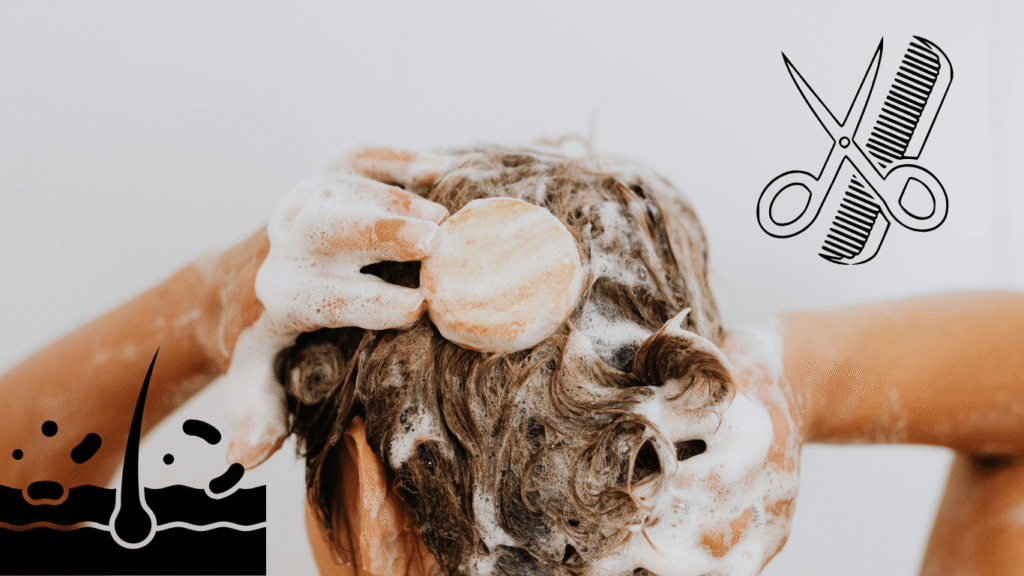
Keeping your scalp clean is very important for healthy hair and also for preventing dandruff, itching, and even forehead pimples. Use a mild shampoo that suits your scalp type. If you have dandruff, use an anti-dandruff shampoo. Washing your hair 2–3 times a week is usually enough because washing too much can remove natural oils and make your scalp even oilier.
When washing, apply shampoo only on the scalp and gently massage with your fingertips for 1–2 minutes. Don’t scratch with nails because it can damage and irritate the skin. Wash your hair properly so no shampoo is left behind, because leftover product can build up and clog your pores. Apply conditioner only to the ends of your hair, not on your scalp, to prevent extra oil and buildup.
Control Excess Oil Production
Controlling excess oil on the scalp is important because too much oil can cause greasy hair, dandruff, clogged roots, and even pimples on the forehead and hairline.First, don’t wash your hair too often because it can remove natural oils and make your scalp produce even more oil. Use a mild shampoo that cleans the scalp without being too harsh. Always rinse your hair properly so no shampoo is left behind.
Keep conditioner only on the hair ends, not on the scalp, because it can make the scalp more oily. Also, clean your combs and hair tools regularly and avoid touching your scalp again and again, as it spreads oil and bacteria.
Treat Dandruff Early
Treating dandruff early is very important because it helps stop flakes, itching, and irritation before they become worse. If not treated, dandruff can spread to the hairline and may even cause pimples on the forehead.Dandruff usually happens because of extra oil, dead skin buildup, or yeast on the scalp. To control it, use an anti-dandruff shampoo with ingredients like ketoconazole, zinc pyrithione, or salicylic acid. These help clean the scalp and reduce flakes and germs.
Wash your hair regularly, but don’t use very harsh shampoo because it can irritate the scalp more. While washing, gently massage your scalp with fingertips to remove flakes, but don’t scratch with nails.
Exfoliate the Scalp (Remove Buildup)
Exfoliating the scalp is important because it removes dead skin, extra oil, sweat, and product buildup that normal shampoo may not fully clean. When this buildup stays on the scalp, it can block hair roots, cause dandruff, itching, and sometimes even forehead pimples when oil and flakes move to the face.You can exfoliate your scalp once a week to keep it clean and balanced. Use a gentle scalp scrub or a product with salicylic acid, which helps dissolve oil and dead skin. Always be very gentle—don’t rub too hard, especially if your scalp is sensitive.
Massage your scalp softly in small circular motions for a short time, then rinse well. After that, wash your hair with a mild shampoo to remove all loosened dirt and flakes.
Balance Diet and Hydration
A balanced diet and good hydration are very important for a healthy scalp because what you eat directly affects oil production, dandruff, and inflammation. When your body lacks nutrients or water, the scalp can become too oily, too dry, or irritated, which may lead to dandruff, hair fall, and even forehead acne.
To improve scalp health, include foods rich in vitamins A, B-complex, C, D, and E, along with minerals like zinc and iron. These nutrients help control oil production, reduce inflammation, and strengthen hair roots. The best foods for scalp health include fruits, green leafy vegetables, nuts, seeds, eggs, fish, and other protein-rich foods. Foods rich in omega-3 fatty acids like walnuts and flaxseeds are also very helpful for reducing scalp dryness and inflammation.
At the same time, drink enough water every day to keep your body and scalp hydrated. Proper hydration helps balance oil levels and removes toxins from the body. On the other hand, eating too much fried food, sugary snacks, and processed food can increase inflammation and make scalp problems worse.
Best Ingredients for a Healthy Scalp
Salicylic Acid – A BHA exfoliant that penetrates into scalp oil and breaks down dead skin cells and buildup. It unclogs hair follicles, reduces dandruff, and helps control excess oil, making the scalp cleaner and smoother.
Ketoconazole – A strong antifungal ingredient that targets Malassezia yeast, a major cause of dandruff and seborrheic dermatitis. It reduces flaking, itching, redness, and long-term scalp inflammation.
Zinc Pyrithione – An antimicrobial agent that controls fungus and bacteria on the scalp. It helps balance oil production, reduces dandruff formation, and soothes irritation and itching.
Tea Tree Oil – A natural antibacterial and antifungal essential oil that helps reduce scalp infections, control oiliness, and calm itching and redness. It must be diluted to avoid irritation.
Aloe Vera – A soothing and hydrating ingredient that reduces scalp inflammation, itching, and dryness. It restores moisture balance and supports healing of an irritated scalp.
Niacinamide (Vitamin B3) – A sebum-regulating ingredient that reduces excess oil production and strengthens the scalp barrier. It also improves scalp health by reducing inflammation and improving circulation.
Panthenol (Vitamin B5) – A deep moisturizing ingredient that attracts and retains water in the scalp. It improves hydration, reduces dryness and flakiness, and strengthens the skin barrier.
Caffeine – A stimulant that improves blood circulation in the scalp, helping deliver nutrients to hair follicles. It supports healthier hair growth and helps reduce hair thinning.
Climbazole – A mild antifungal agent that controls dandruff-causing yeast. It reduces flaking, itching, and scalp irritation while maintaining scalp balance.
Sulfur – A natural antimicrobial and keratolytic ingredient that reduces oiliness, fights dandruff, and helps remove dead skin buildup. It also helps in controlling scalp acne.
FAQs How Scalp Health Affects Facial Skin
Does scalp affect the face?
Yes, scalp health can directly affect facial skin. Excess oil, dandruff, and inflammation from the scalp can travel to the forehead and clog pores, leading to acne or irritation.
Because scalp and face are connected through skin, oil glands, and microbiome, problems on the scalp often show up on the face too.
Can high cortisol cause dry scalp?
Yes, high cortisol (stress hormone) can cause a dry scalp. It disrupts the skin barrier and reduces natural oil balance, leading to dryness and flaking.
Does DHT cause scalp inflammation?
Yes, high DHT levels can contribute to scalp inflammation in some people. It increases oil production and can irritate hair follicles, leading to sensitivity and buildup.
Are scalp and face connected?
Yes, the scalp and face are connected as one continuous skin system. They share oil glands, hair follicles, blood flow, and the same microbiome.
Because of this, scalp issues like excess oil or dandruff can easily affect the forehead and facial skin.
Which vitamin deficiency causes scalp acne?
Vitamin B7 (biotin), vitamin B6, and zinc deficiencies are most linked with scalp acne or follicle inflammation. These nutrients help control oil balance and reduce skin inflammation.
Pingback: Benefits Of Multani Mitti for Skin Care and Hair - Healixcare