
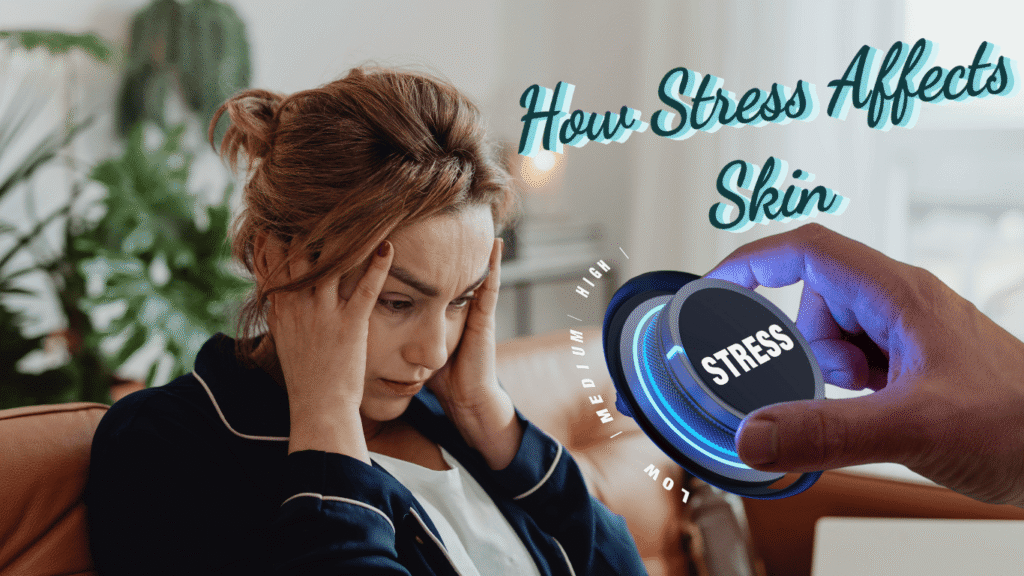
Stress affects both the mind and the skin because they are closely connected through the body’s hormonal and nervous systems. When stress levels rise, it triggers hormonal changes that can increase oil production, leading to acne, while also weakening the skin barrier, causing dryness and sensitivity. At the same time, reduced our blood flow and slower repair processes make the skin look dull and tired. As a result, ongoing stress not only impacts mental well-being but also shows visibly on the skin through issues like acne, dullness, dryness, and increased sensitivity.
How Stress Affects Skin
Stress and skin health are closely connected through hormonal and inflammatory pathways in the body. When we experiences with stress, then our body releases a steroid hormone cortisol, which increases oil production in our skin and continues production can lead to clogged pores and acne. At the same time, stress triggers estrogen, cortiso that make our skin inflammation, which lead to skin conditions like acne, eczema, or sensitivity worse. stress also make our skin’s protective barrier weak which cause dryness, irritation, and a reduced ability to maintain the moisture inside our skin. Stress also slows down the skin’s natural repair process and breaks down the collagen, leading to dullness and early signs of aging. Together, these effects show that stress can disrupt overall skin balance, making it more reactive, damaged, and prone to various skin issues.
Increased Cortisol Levels
Stress increased cortisol through a biological pathway called the Hypothalamic–Pituitary–Adrenal (HPA) axis. When we feel stressed, our brain (hypothalamus) releases CRH (corticotropin-releasing hormone), which signals the pituitary gland to release ACTH (adrenocorticotropic hormone). ACTH then stimulates the adrenal glands to produce cortisol—the main stress hormone.
Cortisol is a steroid hormone that originate from cholesterol. It enters skin cells and binds with glucocorticoid receptors, forming a cortisol–receptor complex. This complex goes into the cell’s control center (nucleus) and changes how genes work, turning some on or off. Because of this, different changes start happening in the skin.
- It increases sebum (oil) production by activating sebaceous glands, which can clog pores and cause acne.
- It promotes the release of inflammatory molecules like cytokines (e.g., IL-6 and TNF-α), leading to redness, irritation, and worsening of skin conditions.
- It reduces the production of collagen by inhibiting fibroblast activity and increasing enzymes called matrix metalloproteinases (MMPs), which break down collagen—this causes dullness and early aging.
- It weakens the skin barrier by reducing lipids like ceramides, leading to dryness and sensitivity.
I stress triggers a hormone chain reaction that increases cortisol, and this hormone directly changes skin cell behavior at a molecular level—causing oiliness, inflammation, barrier damage, and slower repair.
Excess Oil Production
Stress increases the excess oil production by sending hormonal signals that directly activate the skin’s oil glands. When we feel stressed, our body turns on the Hypothalamic–Pituitary–Adrenal (HPA) axis, which leads to the release of cortisol and other stress-related hormones. Cortisol does not work alone, it also increases the activity of androgens (hormones present in both males and females), and these hormones strongly stimulate the sebaceous (oil) glands.
At the cell level, cortisol and androgens attach to special receptors in the oil gland cells (called sebocytes). This sends signals inside the cells that turn on certain genes responsible for making oil. Because of this, the skin starts producing more lipids (oils). This process includes the increased conversion of nutrients like fatty acids and triglycerides into sebum. As a result, the oil glands become more active, slightly larger in size, and produce more oil than normal.
This extra sebum then mixes with dead skin cells on the surface of the skin and can block pores. Inside these clogged pores, bacteria like Cutibacterium acnes grow very quickly. These bacteria break down the oil into fatty acids, which irritate the skin and start inflammation. This causes redness, swelling, and eventually leads to pimples or acne.
Inflammation and Redness
Stress increases inflammation and redness in the skin through a simple but powerful chain of chemical signals inside the body.
When you feel stressed our body activates the Hypothalamic–Pituitary–Adrenal (HPA) axis and releases stress hormones like cortisol. At the same time, stress also activates immune cells in our skin and increases the release of small chemical messengers called cytokines (such as IL-6 and TNF-α). These cytokines are signals that tell the body “there is a problem,” even if there is no real injury.
At the chemical level, stress causes skin cells and immune cells to produce more reactive oxygen species (ROS), also called free radicals. These molecules damage our skin cells and trigger more inflammation. Stress also activates a pathway inside cells called NF-κB (a protein that controls inflammation-related genes). Once activated, NF-κB turns on genes that produce more inflammatory chemicals, making the response stronger.
Cortisol, when it become high for a long time, also disturbs the balance of the immune system. Instead of calming inflammation, chronic stress makes the skin more reactive and sensitive. It also make our skin barrier weak, so irritants and bacteria can enter more easily and trigger further inflammation.
All these chemical reactions cause our blood vessels in the skin to become widen (vasodilation), which increases blood flow to the area. This is why the skin looks red and feels warm. The inflammation also leads to swelling, irritation, and can worsen conditions like acne, eczema, and sensitive skin.
Weak Skin Barrier
Stress makes our skin barrier weak through the hormonal and chemical changes inside our body.
When we are in stressed, our body activates the Hypothalamic–Pituitary–Adrenal (HPA) axis and releases cortisol in blood. High cortisol levels affect how your skin produces important barrier components like lipids (ceramides, cholesterol, and fatty acids). These lipids act like “cement” that keeps skin cells tightly connected and prevents from water loss. When cortisol reduces their production, the barrier becomes loose and damaged.
At the chemical level, stress also increases inflammatory signals (cytokines) and harmful molecules called reactive oxygen species (ROS). These substances damage our skin cells and break down the structure of the outer layer of our skin. Stress can also slow down the production of proteins like filaggrin, which are iresponsible for maintaining a strong and hydrated barrier.
Because of these changes, our skin loses more water (called transepidermal water loss), and it lead to dryness. At the same time, the our skin weak barrier allows irritants, pollution, and bacteria to enter more easily, causing sensitivity, itching, and redness.
Slower Healing Process
Stress is responsible for slows down our skin’s healing process by affecting the hormones, immune response, and cell repair.
When we’re stressed, our body activates the hormone Hypothalamic–Pituitary–Adrenal (HPA) axis and releases cortisol. In the short term, cortisol can help control inflammation, but when stress is constant for long time, then high cortisol starts to suppress the immune system. This means fewer immune cells reach the damaged area, so wounds, acne, or irritation take longer to heal.
At the cellular level, stress reduces the activity of fibroblasts, these are the cells responsible for producing collagen. Collagen is essential for repairing and rebuilding skin. Stress also increases enzymes called MMPs (matrix metalloproteinases), which break down present collagen. So, while production of new collagen reduce, more of it is being destroyed.
Stress also increases inflammatory chemicals (cytokines) and harmful molecules like reactive oxygen species (ROS). These damage skin cells and delay the repair process further. Stress reduces blood flow to the skin, meaning less oxygen and fewer nutrients reach the damaged area, which slows healing.
Because of all these chemical changes, cuts, pimples, and skin damage take longer to recover, and marks or scars may stay for a longer time.
Best Ingredients for Stress-Affected Skin
Niacinamide (Vitamin B3)
Niacinamide (Vitamin B3) helps calm and repair skin that’s been damaged by stress. When you’re stressed, your body releases cortisol, which can make your skin oily, sensitive, and weak by damaging its natural barrier. Niacinamide works by strengthening this skin barrier, so it can hold moisture better and stay protected from damage. It also reduces inflammation, which helps with redness, acne, and irritation caused by stress. At the same time, it controls excess oil production, making the skin look more balanced and less greasy. Overall, it helps your skin become calmer, clearer, and healthier even when stress is affecting it.
Ceramides
Ceramides are natural fats (lipids) found in your skin that act like a “glue,” holding skin cells together and forming a strong protective barrier. When stress increases cortisol levels, this barrier gets weak, leading to dryness, sensitivity, and irritation.
Ceramides help by repairing and strengthening this barrier, so your skin can lock in moisture and stay hydrated. They also protect the skin from external damage like pollution and bacteria, which stress can make worse. By restoring the skin’s natural defense, ceramides reduce dryness, calm irritation, and make the skin smoother and healthier.
Hyaluronic Acid
Hyaluronic Acid helps skin that’s affected by stress mainly by deeply hydrating it. When you’re stressed, cortisol can reduce your skin’s natural moisture, making it look dry, dull, and tired.
Hyaluronic Acid works like a sponge—it attracts and holds water in the skin, keeping it plump and soft. This extra hydration helps reduce dryness and fine lines caused by stress. It also supports the skin barrier, so your skin becomes less sensitive and irritated.
Vitamin C (Antioxidant)
Vitamin C (an antioxidant) helps protect and repair skin that’s affected by stress. When you’re stressed, your body produces more free radicals (unstable molecules) that damage skin cells, causing dullness, uneven tone, and early aging.
Vitamin C works by neutralizing these free radicals, so it prevents damage and keeps skin healthier. It also boosts collagen production, which helps keep the skin firm and smooth. In addition, it brightens the skin, reducing dullness and dark spots caused by stress.
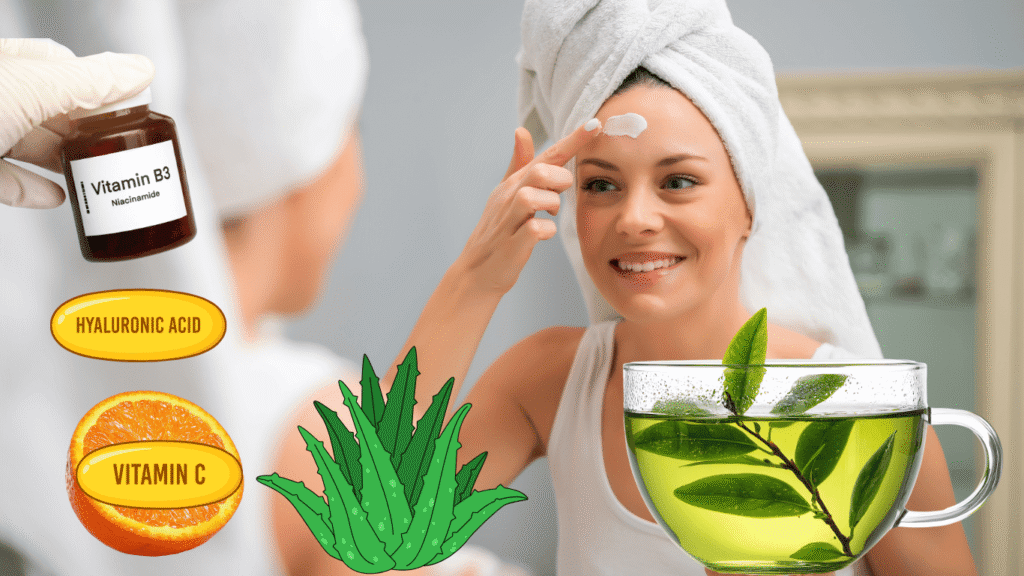
Aloe Vera / Cica (Soothing Ingredients)
Aloe Vera and Cica (Centella Asiatica) are soothing ingredients that help calm skin affected by stress. When stress increases cortisol, it can make your skin sensitive, red, and irritated.
Aloe Vera works by cooling and hydrating the skin, giving quick relief from dryness and irritation. Cica helps repair the skin barrier and reduces inflammation, which makes the skin less reactive and more balanced.
Together, they soothe redness, heal damaged skin, and make stressed skin feel calm, soft, and comfortable.
Green Tea (Antioxidant)
Green Tea is a powerful antioxidant that helps protect skin affected by stress. When stress increases, your body produces free radicals that can damage skin cells, leading to dullness, aging, and irritation.
Green Tea works by neutralizing these free radicals, preventing damage and keeping the skin healthy. It also has anti-inflammatory properties, which help reduce redness, acne, and sensitivity caused by stress. In addition, it can control excess oil production, making it helpful for stress-related breakouts.
How to Protect Skin from Stress Affects
Protecting your skin from stress is about controlling both internal stress signals and external skin care habits. When stress activates the Hypothalamic–Pituitary–Adrenal (HPA) axis, it increases cortisol, inflammation, and oil production—so the goal is to calm the body and support the skin barrier.
First, manage stress from within. Practices like meditation, deep breathing, exercise, and proper sleep help lower cortisol levels. When stress hormones stay balanced, your skin produces less excess oil and fewer inflammatory chemicals, which helps prevent acne, redness, and sensitivity.
Second, focus on gentle skincare. Use a mild cleanser to remove dirt and excess oil without stripping the skin. Over-cleansing can damage the barrier further. Follow with a good moisturizer that contains barrier-repair ingredients like ceramides, fatty acids, and hyaluronic acid to keep the skin hydrated and strong.
Third, protect your skin from damage. Daily sunscreen is important because stressed skin is more sensitive to UV damage, which can increase inflammation and aging. Antioxidants like vitamin C help neutralize harmful molecules called reactive oxygen species (ROS) that are produced during stress.
Also, maintain a healthy diet. Foods rich in vitamins, omega-3 fatty acids, and antioxidants help reduce inflammation and support skin repair from the inside. Drinking enough water keeps the skin hydrated and improves its natural defense.
Finally, avoid stress-related habits like touching your face, picking acne, eating too much junk food, or skipping your skincare routine. These habits can worsen the effects of stress on your skin.
FAQ About How Stress Affects Skin
Can skin recover from stress?
Yes, skin can recover from stress once stress levels are reduced and proper care is taken. When cortisol decreases, oil production, inflammation, and damage also start to normalize. With good skincare, sleep, and a healthy lifestyle, the skin can repair itself and regain its balance.
What are 12 ways to deal with stress?
There are many simple ways to deal with stress, like exercise, meditation, good sleep, and healthy eating. Taking breaks, staying hydrated, and talking to someone also help reduce stress. Small daily habits can keep your mind calm and balanced.
How does stress affect your skin?
Stress affects your skin by increasing cortisol, which leads to excess oil production, clogged pores, and acne. It also causes inflammation, weakens the skin barrier, and slows healing, resulting in dryness, dullness, and sensitivity.
How to deal with stress acne?
Stress acne can be managed by controlling both stress and skincare. Reduce stress through sleep, exercise, and relaxation techniques, as this helps lower cortisol and oil production. Keep your skin clean with a gentle cleanser, use non-comedogenic products, and avoid touching or picking your face. Ingredients like salicylic acid and niacinamide can help control oil and reduce inflammation.
Does stress cause acne?
Yes, stress increases cortisol, which boosts oil production and clogs pores. This creates the perfect environment for acne and breakouts.
Does stress affect skin healing?
Stress slows down cell repair and reduces collagen production. This makes wounds, acne, and marks heal more slowly.
Pingback: Coconut Oil for Blackhead Removal Naturally - Healixcare
Pingback: Benefit of Organic Green Tea for Skin - Healixcare
Pingback: Beetroot for Skin The Natural Glow Booster - Healixcare
Pingback: How to Treat Acne Naturally 10 Home Remedies - Healixcare
Pingback: Benefits Of Vitamin C Rich Foods for Skin - Healixcare
Pingback: Benefits of Face Yoga in skin Tighten & Shape Face - Healixcare
Pingback: Coffee Benefits for Skin Natural Glow, Acne Control - Healixcare
Pingback: Chandan Paste Benefits for Skin Acne, Pimples - Healixcare