
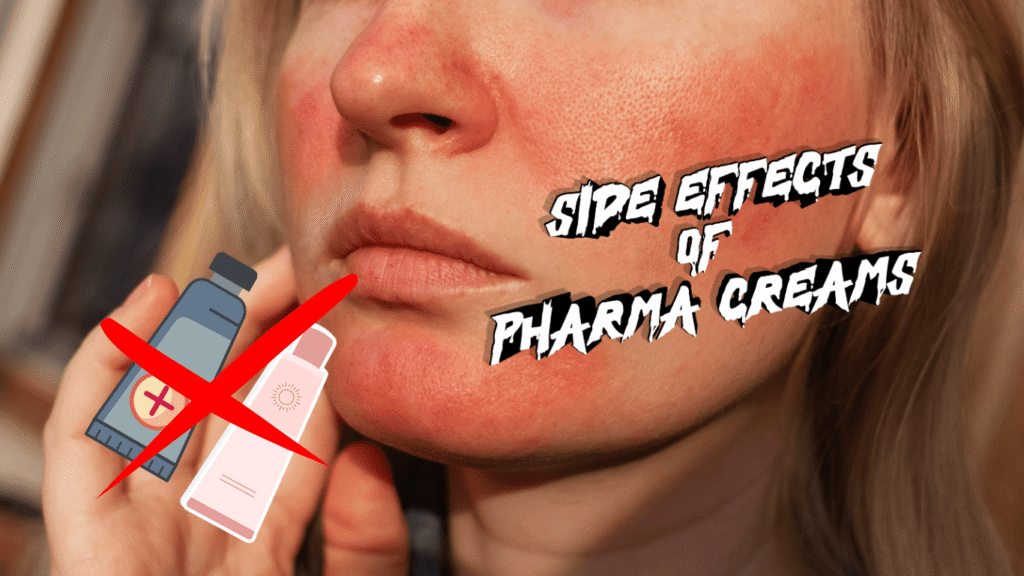
Many people don’t know the Side Effects of Pharma Creams they use pharma creams for skin problems like acne, pimples, dark spots, itching, or even to get fair skin quickly. These creams are easily available in medical stores and often show fast results, so people use them without thinking much.
But the main question is—are these creams really safe for our skin or not?
Pharma creams can be helpful if used in the right way under a doctor’s advice. But if we use them without knowing, or use them for a long time, they can also cause problems like skin thinning, more acne, or other skin damage.
What Are Pharma Creams?
Pharma creams are medicated creams available in pharmacies that are specially made to treat different skin problems. Not a regular beauty creams, these are not just for improving appearance—they are designed to heal and treat skin conditions.
These creams are widely used in dermatology for common skin issues such as acne, infections, rashes, redness, itching, and allergies. They contain active ingredients that directly work on the skin problem and help in faster recovery.
Some pharma creams are easily available in medical stores and do not need a doctor’s prescription. However, many stronger creams can only be used when prescribed by a doctor, especially those used for serious skin infections or long-term skin conditions.
Main Side Effects Pharma Creams
Skin thinning
Pharma creams can cause skin thinning reason when you use them incorrectly, for too long, or without a doctor’s advice. Many of these creams contain strong ingredients like steroids, which reduce redness and inflammation quickly but can also affect the skin’s natural structure. When used continuously, Pharma creams reduce the production of collagen, collagen is a protein that keeps skin strong, thick, and healthy. As collagen decreases, the skin slowly becomes thin, weak, and more sensitive. Over time, the skin may start looking shiny, stretched, and fragile, and even small injuries or scratches can leave marks easily. You may also notice visible blood vessels, increased sensitivity, burning sensation, and slow healing of wounds.
Other reactions from wrong use of pharma creams can also include acne flare-ups (steroid acne), redness and irritation, skin discoloration (light or dark patches), allergic reactions or itching, and Atopic Dermatitis (inflammation, redness around the mouth). That’s why these creams should always be used carefully and only under proper medical guidance to avoid long-term skin damage.
Acne breakouts
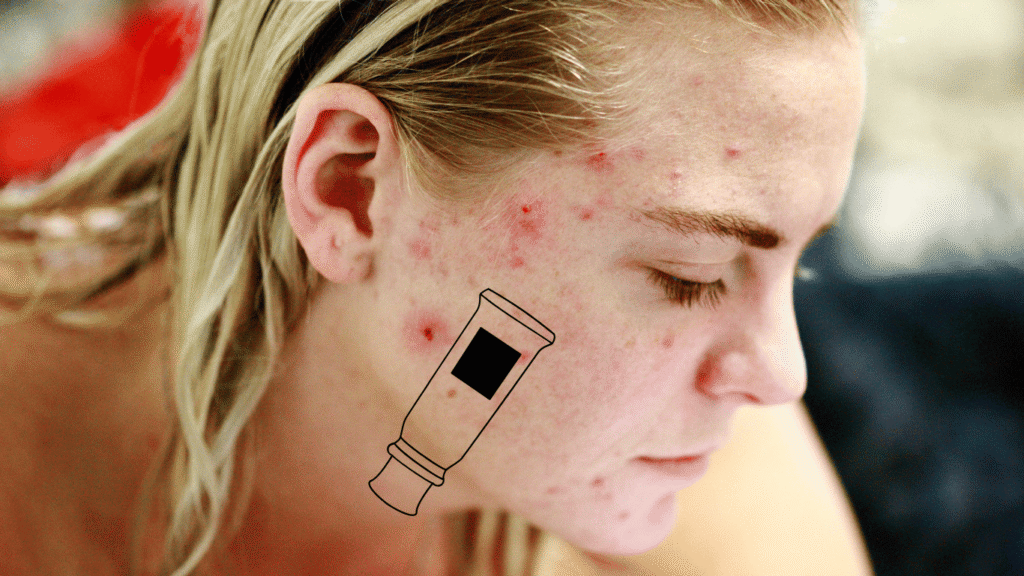
Pharma creams can cause acne when they are used in wrong way, especially steroid-based creams or strong medicated creams without a doctor’s advice. These creams may first improve skin condition, but after some time they can disturb the skin’s natural balance. Steroids may reduce inflammation quickly, but they also increase oil production in the skin and clog pores, which leads to pimples, whiteheads, and acne flare-ups.
This type of acne is often called steroid acne. When the skin becomes dependent on the cream, stopping it suddenly can also trigger more pimples” or “acne” because the skin goes through a return of skin problem after stopping cream, where oil glands become overactive again. As a result, small red bumps, pus-filled pimples, and uneven skin texture can appear, especially on the face, cheeks, and forehead. That’s why pharma creams should always be used carefully and only under medical guidance to avoid acne reactions and long-term skin damage.
Redness & irritation
Pharma creams can cause redness and irritation when they are used incorrectly, in excess, or without proper medical guidance. Many medicated creams, especially those creams which containing steroids, antibiotics, or strong active ingredients, can disturb the skin’s natural protective barrier. When this barrier gets weakened, the skin becomes more sensitive and reacts easily to normal things like sunlight, heat, dust, or even water. This leads to redness, burning sensation, itching, and irritation on the skin.
Steroid creams, for example, first reduce inflammation but with repeated use this creams can make the skin thin and reactive, so even small triggers can cause flushing or redness. Some people may also develop contact dermatitis, where the skin becomes inflamed after reacting to the chemical ingredients in the cream. Over time, continuous use can make the skin more fragile, so irritation becomes frequent and harder to control. That’s why pharma creams should always be used carefully and only as prescribed to avoid redness and long-term skin sensitivity.
Dark spots / pigmentation
Pharma creams can cause dark spots or skin pigmentation when the misused them, overused, or used without medical guidance, especially creams containing steroids or strong active ingredients. These creams disturb the skin’s natural healing process and damage the protective skin barrier. When the skin becomes weak and sensitive, it reacts to inflammation or irritation by producing extra melanin, which is the pigment that gives skin its color. This excess melanin leads to dark patches, uneven skin tone, and hyperpigmentation.
In some cases, when a strong cream is stopped suddenly after long use, the skin goes through a return of skin problem after stopping cream, where irritation and inflammation increase again, which can also trigger more pigmentation. Sun exposure while using these creams makes the condition worse because damaged skin becomes more sensitive to UV rays. As a result, areas of the face may develop dark spots, uneven patches, or dull-looking skin. That’s why pharma creams should always be used carefully and under proper medical supervision to avoid pigmentation problems.
Dependency
Pharma creams can cause dependency when they are used continuously for a long time, especially steroid-based creams. This happens because these creams give quick relief from skin problems like redness, itching, or acne, so the skin starts to “feel normal” only when the cream is applied. Over time, the skin’s natural healing process becomes weak because of the active ingredients (like steroids) suppress inflammation and slow down the skin’s own repair system.
When the cream is used regularly, the skin gets used to its effect and stops responding normally without it. return of skin problem after you stop using the cream, symptoms like redness, acne, or irritation come back even worse. This makes the person feel like they need the cream again and again to control the problem, which leads to psychological and physical dependency. In simple terms, the skin stops healing properly on its own and starts relying on the cream to look and feel normal.
Fungal infection risk
Pharma creams can increase the risk of fungal infections when they are used without advices, especially when the creams contain steroids combined with antibiotics or antifungal agents without proper medical advice. Steroids work by suppressing the immune response in the skin, which reduces inflammation and itching quickly. But at the same time, they also lower the skin’s natural defense system that normally fights germs, bacteria, and fungi.
When the skin’s immunity becomes weak, fungus can grow easily in warm, moist areas of the body, especially on the face, folds area, or private areas. This is why long-term or incorrect use of steroid creams can lead to conditions like tinea incognito, where fungal infection becomes hidden &slow at the first but spreads silently under the effect of the cream.
In many cases, the cream may temporarily reduce redness, so the infection looks better on the surface, but inside the fungus keeps growing. Once the cream is stopped, the infection can come back more strongly with itching, redness, circular rashes, and spreading patches. That’s why pharma creams should always be used carefully and only under a doctor’s guidance to avoid worsening fungal infections.
How To Use Pharma Creams
Pharma creams should always be used safely to avoid side effects. The most important rule is to use them only when prescribed by a doctor, because a dermatologist knows the right strength and type needed for your skin problem. They should also be used for a limited period of time only, as long-term use can lead to issues like skin thinning, acne, or pigmentation. These creams should never be used for cosmetic purposes like skin fairness or glowing skin, because they are meant for medical treatment, not beauty enhancement. If you are unsure about any cream or its usage, it is always best to consult a dermatologist before applying it, so you can avoid damage and keep your skin healthy.
Faq On Pharma Creams For Skin
What are the common side effects of pharma creams?
Common side effects include skin thinning, redness, irritation, acne breakouts, dark spots, and increased skin sensitivity.
Are pharma creams safe to use?
Yes, they are safe when used as prescribed by a doctor. But misuse or overuse can cause side effects like skin thinning or irritation.
Can I use pharma creams for fairness or glowing skin?
No, pharma creams are not meant for cosmetic fairness or beauty enhancement. They are only for treating medical skin conditions.
Why do pharma creams cause skin thinning?
Some creams, especially steroid-based ones, reduce collagen production in the skin, making it thin, weak, and fragile over time.
Can pharma creams cause acne?
Yes, wrong or long-term use can increase oil production and clog pores, leading to steroid acne and breakouts.
Pingback: How Scalp Health Affects Facial Skin - Healixcare
Pingback: Curd Benefits for Skin To Glow Naturally - Healixcare
Pingback: Open Pores Home Remedies That Actually Work - Healixcare
Pingback: Benefits of Vitamin A in Skin for Removing Dead Skin - Healixcare
Pingback: How Scalp Health Affects Facial Skin – properhealth.pro