
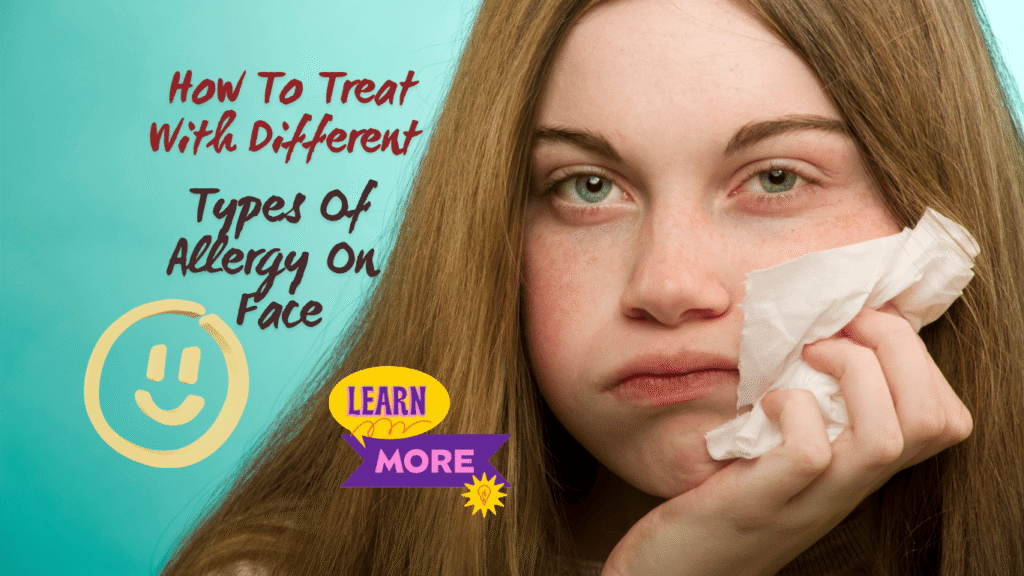
A face allergy occurs when your skin reacts to something it considers harmful, such as skincare products, makeup, certain foods, environmental factors like dust or pollen, medications, or even sun exposure. When your skin comes in contact with these triggers, your immune system releases chemicals like histamine, that cause inflammation. This leads to common symptoms such as redness, itching, swelling, rashes, or dryness on the face. Sometimes, sudden weather changes or harsh chemicals can also weaken the skin barrier, making it more sensitive and prone to allergic reactions.
Types Of Allergy On Face
There are mainly 6 types of Allergy On Face occurs, each allergy caused by triggers or reactions one of the most common is Contact Dermatitis, which arise when it reacts with skincare products, makeup, soaps ,harsh chemicals and out comes to redness, itching. Another type is Atopic Dermatitis It is a type of eczema and is closely linked to sensitive skin and allergies, commonly occurs in childhood but can affect people of all ages it happens when your skin barrier becomes weak, making our skin sensitive for irritantion, allergens, and bacteria to enter in our skin. This leads to redness, itching, and irritation condition that makes the skin dry, sensitive and inflamed. urticaria, It is a type of hives,Urticaria occurs when the body releases histamine in response usually of certain foods, medications, stress, allergic or immune response and make our skin red, raised, itchy bumps on our face. Angioedema happens when fluid builds up in the deeper layers of our skin especially around the eyes and lips due to the release of chemicals like histamine. It can appear fast on our skin and may last longer than regular hives. Photosensitivity occurs when our skin becomes more sensitive to ultraviolet (UV) radiation from the sun where exposure to sunlight causes rashes and irritation on the face. Even short sun exposure can trigger a reaction, especially on the areas like the face, neck, and arms. and also food allergies and Drug Allergies can also show symptoms on the face, such as redness, swelling, or rashes.
Treatment Of Allergies On Face
Avoid the trigger things such as soaps, perfumes, jewellery, or harsh chemicals. In small or starting case , applying hydrocortisone cream on our skin it helps reduce redness and itching but in serious cases you may require high-potency topical corticosteroids In severe cases of Contact Dermatitis, doctors usually prescribe stronger medications to quickly reduce inflammation, itching, and skin damage. These are not over-the-counter creams—you should use them under medical supervision. These are the first-line treatment for severe flare-ups. Clobetasol propionate (very strong), Betamethasone dipropionate, Mometasone furoate. To get relieve from itching, antihistamines like Cetirizine or Loratadine can and in supportive care such as cold compresses, calamine lotion, and using a fragrance-free moisturizer also helps to make our skin comfort the skin.
During Atopic Dermatitis immune system overreacts and Skin barrier becomes weak so the treatment is focused on long-term control on Allergy On Face to repair the skin barrier, reduce inflammation. Regular drink water and use of thick fragrance-free moisturisers is essential to keep the skin hydrated Topical corticosteroids are the most commonly used medicines to control inflammation, redness, and itching in skin conditions like Atopic Dermatitis and Contact Dermatitis while while non-steroidal options like calcineurin inhibitors may be preferred for sensitive areas.In more severe cases, treatments like phototherapy or systemic medications may be required under medical supervision.
To reduce the itching, swelling, and preventing triggers the primary treatment is antihistamines such as cetirizine, Loratadine, or Fexofenadine, which block histamine and reduce symptoms. In severe cases, small courses of corticosteroids such as Prednisolone may be prescribed by doctor to control inflammation. In chronic or serious cases, advanced treatments such as Omalizumab can be used under medical supervision. While with medicined also avoiding the things which you now they can triggers (such as fast food, stress, heat, or medications) wearing loose clothing, and using lotions like calamine can help our skin to manage symptoms. reducing itching and discomfort cold compresses have good result after use.
Angioedema
Angioedema causes deep swelling under the skin or mucous membranes. it mostly affects areas like face (especially lips and eyelids), tongue, throat, hands, feet, and also can be in genital region. The most common cause is allergic reaction, triggered by foods, medications (such as Aspirin or Ibuprofen), insect stings, or infections. To reduce swelling treatment includes antihistamines such as Cetirizine or Loratadine, which help control swelling and itching. for severe condition, corticosteroids like Prednisolone are given to reduce inflammation. In serious situations, especially when there is involvement of the throat or difficulty breathing, in this Epinephrine is life-saving. In cases of hereditary angioedema, specific treatments such as C1 esterase inhibitor replacement or drugs like Icatibant are used also avoiding known triggers such as certain drugs like ACE inhibitors, applying cold compresses, and close monitoring of airway symptoms.
Photosensitivity
Medications – e.g., Doxycycline, Ibuprofen, Hydrochlorothiazide Skin conditions – like Lupus erythematosus, Dermatomyositis Genetic disorders – e.g., Xeroderma pigmentosum Cosmetics or perfumes applied before sun exposure Certain plants/foods (like lime, celery – phytophotodermatitis)Photosensitivity (skin reaction to sunlight or UV exposure) it can be handle by my combination protection, medication, treatment mainly focuses on struct sun protection. person should avoid direct sunlight, especially between 10 AM and 4 PM and use broad-spectrum sunscreens with SPF 30 or higher that protect against both UVA and UVB rays. clothing like long sleeves, hats, and sunglasses is also important. Popular treatment like corticosteroids can be use to reduce inflammation and redness, while comfort agents like calamine lotion or aloe vera help relieve irritation. In more serious cases, oral antihistamines may be given to control itching. If the photosensitivity is due to a drug or underlying condition such as Systemic Lupus Erythematosus or porphyria, then treating the primary disease or leave the causative medication is essential. In chronic or severe cases, doctors may prescribe immunosuppressive drugs or antimalarials like Hydroxychloroquine.
Drug Allergies
Types of Drug Allergy On Face (Gell & Coombs Classification)
Type I (Immediate, IgE-mediated) Example: Anaphylaxis Symptoms: urticaria, angioedema, bronchospasm Type II (Cytotoxic) Causes hemolytic anemia, thrombocytopenia Type III (Immune complex) Example: serum sickness Features: fever, rash, joint pain Type IV (Delayed, T-cell mediated) Example: Stevens-Johnson syndrome Causes severe skin eruptions To deal with drug allergy firstly you permanently avoid the offending drug. Mild reactions such as itching or rash are managed with oral antihistamines, while topical corticosteroids can be used to reduce local inflammation. In moderate cases, systemic corticosteroids may be required to control symptoms. Serious reactions like Anaphylaxis are medical emergencies and must be treated with intramuscular Epinephrine, followed by oxygen, intravenous fluids, and airway support. Patients with a history of serious reactions should be advised to avoid the causative drug permanently, carry emergency medication if needed, and wear medical alert identification.
Home Remedies for Face Allergies
| Remedy | How to Use | Benefits |
|---|---|---|
| Cold Compress | Wrap ice in cloth, apply for 10–15 min | Reduces redness, swelling, and itching |
| Aloe vera | Apply fresh gel, leave for 20 min, rinse | Soothes irritation, anti-inflammatory |
| Coconut oil | Apply small amount on dry skin | Moisturizes and repairs skin barrier |
| Oatmeal Paste | Mix oats with water, apply 15–20 min | Relieves itching and inflammation |
| Cucumber | Place slices or apply juice | Cooling and calming effect |
| Honey | Apply thin layer for 10–15 min | Heals skin, antibacterial |
| Rose Water | Apply with cotton on face | Refreshes and reduces redness |
FAQs About Face Allergies
How do you treat allergy on face ?
Face allergies are treated by avoiding triggers, using gentle skincare, cold compress, and antihistamines to reduce irritation.
For severe or persistent cases, doctors may prescribe medicated creams like corticosteroids for faster relief.
How do I get rid of an allergy on my face fast?
Use a cold compress, mild cleanser, and antihistamines to quickly reduce redness and itching.
Avoid irritants and apply soothing ingredients like aloe vera for faster healing.
What cream is best for facial allergy?
Mild corticosteroid creams and soothing moisturizers help reduce inflammation and itching.
Always choose fragrance-free, hypoallergenic products suitable for sensitive skin.
What are the 7 allergy symptoms?
Common allergy symptoms include: sneezing, itchy or watery eyes, runny nose, skin rashes or hives, swelling, coughing, and shortness of breath.
These signs can vary in severity depending on the allergen and individual sensitivity.
Can home remedies cure face allergies?
Home remedies like Honey or Cucumber can help soothe symptoms, but they may not cure the underlying cause.
Pingback: How to Remove Dark Circle Naturally Fast at Home - Healixcare
Pingback: How to Treat Acne Naturally 10 Home Remedies - Healixcare
Pingback: Skin Barrier Repair Signs, Causes, and Treatments - Healixcare
Pingback: Skin Barrier Repair Signs, Causes, and Treatments – properhealth.pro
Pingback: How to Remove Dark Circle Naturally Fast at Home – properhealth.pro
Pingback: Chandan Paste Benefits for Skin Acne, Pimples - Healixcare