
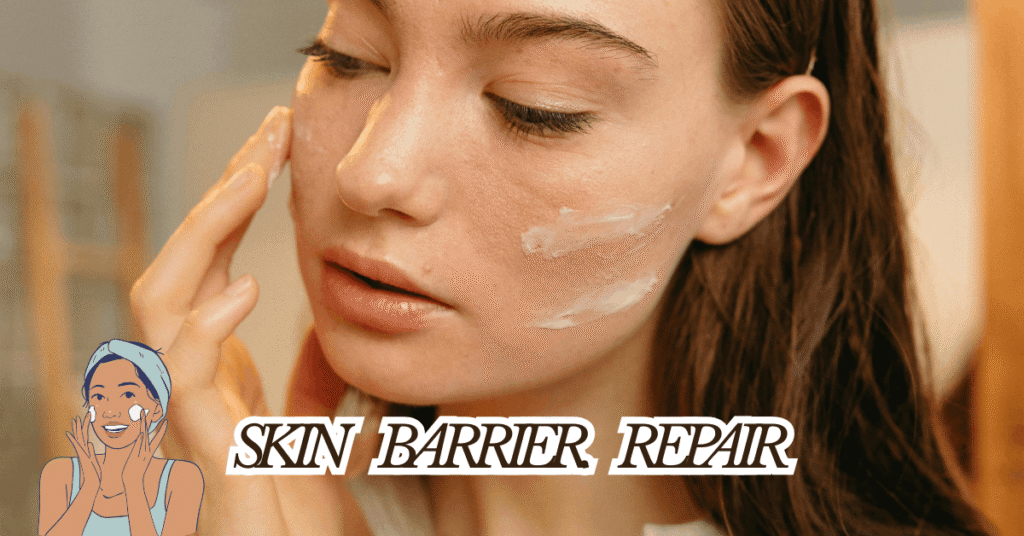
Skin barrier is a protective layer made of skin cells, ceramides, cholesterol, and fatty acids that work like bricks and cement to keep moisture in and harmful bacteria, pollution, and allergy irritants out. But when you over-exfoliate with AHAs/BHAs, use harsh face washes, apply too much retinol, spend too much time in the sun, or constantly try new skincare products, this barrier can start breaking down.
Chemically, UV rays and pollution release free radicals, unstable molecules that trigger lipid peroxidation, a reaction that damages our skin’s natural oils and weakens its protective layer. Harsh exfoliants can also disrupt your skin’s natural pH and strip away healthy skin cells before they fully develop.
Once this happens, our skin loses water faster through transepidermal water loss (TEWL), leading to dryness, flaking, tightness, redness, burning sensations, acne breakouts, and irritation. Tiny cracks in the barrier allow allergens and bacteria like Cutibacterium acnes to enter more easily, which can trigger inflammation and worsen skin conditions like Acne vulgaris, Eczema, and Rosacea. If your skin suddenly feels sensitive, dull, itchy, or reacts to products that once worked fine, your skin barrier may be damaged—and repairing it should be your first priority.
Signs Your Skin Barrier is Damaged
When your skin barrier is damaged, it can no longer hold moisture properly or protect your skin from irritants, bacteria, and pollution. As the protective lipids like ceramides, cholesterol, and fatty acids break down, your skin starts losing water through transepidermal water loss (TEWL), which causes dryness and dehydration. One of the first signs is tight, rough, or flaky skin because there isn’t enough moisture to keep skin smooth.
You may also notice redness, itching, burning, or stinging after applying skincare products. This happens because tiny cracks in the barrier allow active ingredients and irritants to penetrate deeper into the skin, triggering inflammation. Your skin may suddenly become sensitive to products that never caused problems before.
Frequent acne breakouts can also be a sign of a damaged barrier. When the barrier weakens, bacteria like Cutibacterium acnes and excess oil can clog pores more easily, leading to pimples and irritation. In some cases, weakened skin can worsen conditions like Acne vulgaris, Eczema, or Rosacea.
Another common sign is dullness and faster aging. When the barrier is compromised, skin cannot repair itself properly, collagen breakdown increases, and your face may look tired, irritated, or develop fine lines faster. If your skin feels irritated all the time, looks flaky yet oily, or reacts easily, your skin barrier may need repair.
Best Ingredients for Skin Barrier Repair
Ceramides
Ceramides are natural fats (lipids) already present in your skin barrier, and they make up nearly 50% of the outer skin layer. Think of your skin barrier like a brick wall—skin cells are the bricks, and ceramides act like the cement that holds everything together. When your barrier gets damaged from over-exfoliation, harsh cleansers, UV rays, or retinol, this “cement” starts breaking down, creating tiny gaps where moisture escapes and irritants enter.
Chemically, UV rays and pollution create free radicals (Reactive Oxygen Species – ROS) such as superoxide radicals (O₂⁻) and hydroxyl radicals (OH•). These unstable molecules attack skin lipids through a reaction called lipid peroxidation. In simple terms- Healthy skin lipids + ROS → damaged lipids + weakened barrier
This reaction breaks down ceramides, fatty acids, and cholesterol, which causes dryness, redness, and sensitivity.
When you apply skincare products containing ceramides, they help refill these missing lipids and repair the damaged barrier. Ceramides bind with cholesterol and fatty acids to rebuild the protective lipid layer between skin cells.
Simple reaction process- Ceramides + Cholesterol + Fatty Acids → Stronger skin barrier + Reduced water loss
They also reduce transepidermal water loss (TEWL) by sealing tiny cracks in the skin, so your skin can hold moisture better. Some ceramides also help signal your skin cells to produce more natural lipids and repair proteins, which speeds up healing. As your barrier gets stronger, redness decreases, hydration improves, and your skin becomes smoother, calmer, and less sensitive.
Hyaluronic Acid
Hyaluronic acid (HA) helps to repair our damaged skin barrier by deeply hydrating the skin and preventing moisture loss. It’s a natural sugar molecule called a humectant, which means it attracts and holds water. One HA molecule can bind up to 1,000 times its weight in water, helping dry and damaged skin feel plump and hydrated.
When your skin barrier is damaged, tiny gaps form between skin cells, and water escapes through transepidermal water loss (TEWL). This leaves skin dry, tight, flaky, and irritated. Hyaluronic acid works like a water magnet—it pulls moisture from the environment and deeper skin layers to hydrate the outer layer.
Simple reaction process- Hyaluronic Acid + Water molecules (H₂O) → Increased skin hydration
HA forms a lightweight moisture layer on the skin surface that helps reduce water evaporation. This gives your skin the hydration it needs to repair itself faster. Chemically, damaged skin often triggers inflammation and weakens natural enzymes that keep skin healthy. Hyaluronic acid helps create a hydrated environment where skin repair enzymes can function better and skin cells can regenerate properly.
It also supports wound healing by helping skin cells communicate and move more efficiently to repair damaged areas. As hydration improves, your skin barrier becomes smoother, less irritated, and better able to protect itself from pollutants and bacteria. That’s why hyaluronic acid is one of the best ingredients for repairing dry, dehydrated, and damaged skin barriers.
Niacinamide
Niacinamide (Vitamin B3) helps repair a damaged skin barrier by increasing your skin’s natural production of ceramides, fatty acids, and cholesterol—the essential lipids that keep your barrier strong. When your barrier is damaged, these lipids decrease, causing dryness, irritation, and moisture loss.
Chemically, niacinamide gets converted into NAD⁺ (Nicotinamide Adenine Dinucleotide) inside skin cells. NAD⁺ helps power many repair processes in the skin and supports enzymes that produce healthy lipids. Simple reaction process- Niacinamide → NAD⁺ activation → Increased ceramide production → Stronger skin barrier
Niacinamide also reduces transepidermal water loss (TEWL) by helping skin hold moisture better. It boosts the production of a skin protein called keratin, which strengthens the outer layer of your skin.Another major benefit is its anti-inflammatory effect. Damaged skin often produces inflammatory chemicals and free radicals that cause redness and irritation. Niacinamide helps reduce oxidative stress by lowering these harmful molecules.
Simple reaction- Free radicals (ROS) + Niacinamide support → Reduced oxidative stress + calmer skin
It can also help control excess oil production and reduce redness, making it useful for people dealing with both acne and a damaged barrier. Over time, niacinamide helps your skin become stronger, smoother, less sensitive, and better protected against environmental damage.
Squalane
Squalane helps repair a damaged skin barrier by replacing lost oils and locking moisture into the skin. It is a stable form of squalene, a natural lipid your skin already produces in sebum. When your skin barrier gets damaged from harsh cleansers, over-exfoliation, or UV damage, your natural oils decrease, leaving the skin dry and vulnerable.
Chemically, UV rays and pollution create free radicals (ROS) that oxidize natural skin oils through lipid peroxidation– Natural skin oils + ROS → Oxidized lipids + weakened barrier
This damages the protective lipid layer and increases moisture loss. When you apply squalane, it mimics your skin’s natural oils and fills the gaps between skin cells. It forms a lightweight protective layer that reduces transepidermal water loss (TEWL) and helps keep hydration locked in.
Simple reaction process- Squalane + skin surface lipids → stronger moisture barrier + reduced water loss
Unlike some heavy oils, squalane is non-comedogenic and absorbs easily into the skin. It also has antioxidant properties that help protect skin from oxidative stress caused by pollution and UV rays. As your skin stays moisturized and protected, irritation decreases, dryness improves, and your barrier gets time to heal naturally.
Panthenol
Panthenol (Pro-Vitamin B5) helps repair a damaged skin barrier by attracting moisture, reducing inflammation, and supporting skin healing. When applied to the skin, panthenol converts into pantothenic acid (Vitamin B5), which helps skin cells repair themselves faster.
Simple conversion reaction- Panthenol → Pantothenic Acid (Vitamin B5)
Pantothenic acid plays a role in producing coenzyme A (CoA), which helps skin cells make fatty acids and repair damaged lipids in the skin barrier. Simple reaction process- Pantothenic Acid → Coenzyme A production → More fatty acid synthesis → Stronger skin barrier
Panthenol also works as a humectant, meaning it attracts water molecules to the skin and helps reduce transepidermal water loss (TEWL).
Panthenol + H₂O → Increased hydration + softer skin
When your barrier is damaged, inflammation causes redness, itching, and irritation. Panthenol helps calm this by reducing inflammatory signals and supporting faster skin regeneration. As hydration improves and damaged lipids are repaired, your skin feels smoother, less irritated, and more protected. That’s why panthenol is commonly used in moisturizers and barrier-repair creams for sensitive or damaged skin.
Natural Remedies for Skin Barrier Repair
If your skin barrier is damaged and you prefer natural remedies, focus on ingredients that hydrate skin, reduce inflammation, and restore lost lipids. Natural remedies won’t replace a good ceramide moisturizer, but they can help calm mild barrier damage.
Aloe Vera is rich in polysaccharides that attract water to the skin and help reduce dryness. It also contains antioxidants that calm inflammation.
Simple process: Aloe compounds + skin → hydration + reduced redness
Raw Honey works as a natural humectant, meaning it pulls moisture into the skin. It also contains enzymes and antibacterial compounds that help protect damaged skin from harmful bacteria.
Honey + water molecules → better hydration
Oatmeal (Colloidal Oats) contains beta-glucan and avenanthramides that soothe irritation and help strengthen the skin barrier. It forms a protective layer that reduces moisture loss. This is often helpful for people with Eczema.
Coconut Oil contains fatty acids like lauric acid that help reduce dryness by sealing moisture into the skin. However, acne-prone skin should be careful because it may clog pores.
Cucumber contains high water content and antioxidants that help cool irritated skin and reduce inflammation.
Milk Cream or Yogurt contains fats and lactic acid that can provide mild hydration and gentle exfoliation, but overuse may irritate sensitive skin.
Even with natural remedies, avoid lemon juice, baking soda, toothpaste, or harsh DIY scrubs because they can worsen barrier damage. Keep your routine simple and always patch test natural ingredients before applying them to your full face.
FAQ About Skin Barrier Repair
How do I repair my skin barrier fast?
Repair your skin barrier fast by stopping harsh products like exfoliants, retinol, and strong acne treatments. Use a gentle cleanser, ceramide-rich moisturizer, hydrating ingredients like hyaluronic acid, and wear sunscreen daily to protect healing skin.
What is best for skin barrier repair?
The best ingredients for skin barrier repair are ceramides, hyaluronic acid, niacinamide, panthenol, squalane, and fatty acids because they restore lost lipids, improve hydration, and reduce irritation. A gentle skincare routine and daily sunscreen also help your barrier heal faster.
How can I tell if my skin barrier is damaged?
Signs of a damaged skin barrier include dryness, flaking, redness, burning, itching, tightness, and sudden sensitivity to skincare products. You may also notice acne breakouts, rough texture, or skin that feels oily yet dehydrated.
How long does it take to rebuild a damaged skin barrier?
A mildly damaged skin barrier may heal in 2 to 4 weeks, while severe damage can take several months depending on your skincare habits. Using gentle products and avoiding over-exfoliation can speed up recovery.
How to fix skin barrier in 3 days?
ou can calm irritation in 3 days by stopping harsh skincare products and using a gentle cleanser, rich moisturizer, and sunscreen. However, fully repairing a damaged skin barrier usually takes a few weeks, depending on how severe the damage is.
How to heal a damaged skin barrier naturally?
You can help heal a damaged skin barrier naturally by using soothing remedies like aloe vera, raw honey, oatmeal, and cucumber to calm irritation and improve hydration. Avoid harsh DIY ingredients like lemon, baking soda, or rough scrubs that can worsen damage.